01JUL2026
Safety and Security with SMM Panels: A Complete 2026 Guide
Table of Contents
Yes, SMM panels are safe to use, but only if you choose a provider that never asks for your password, uses gradual delivery, offers a refill guarantee, and accepts secure payment methods. Panels promising instant followers at impossibly low prices are the most common source of scams.
Thousands of users lose money every year to fake SMM panels that disappear after payment, or that deliver bot engagement that vanishes within days. The SMM panel industry has exploded alongside demand for social proof, and wherever money flows online, scammers follow close behind.
The market today is a genuine mix of reliable providers and outright scams, and they often look identical at first glance. A clean website, a working payment page, and a few testimonials can be faked just as easily by a scam operation as built honestly by a legitimate one.
This guide breaks down exactly how to tell the two apart, what real risks exist, the specific warning signs of a fake panel, the myths that confuse most first-time buyers, and the practices a genuinely safe provider follows.
Is It Actually Safe to Use an SMM Panel?
SMM panels themselves are not illegal in most countries. The real risk isn't the concept of an SMM panel; it's the specific provider you choose to trust with your money and your account.
Two distinct things can go wrong.
- The first is financial risk: you pay and receive nothing, or you receive low-quality bot engagement that disappears within days.
- The second is account risk: a sudden, unnatural spike in followers or engagement can get flagged by a platform's algorithm, leading to a temporary shadow ban or restricted reach.
Both risks trace back to the same root cause: the quality and practices of the panel itself. A provider using real delivery methods and gradual rollout carries minimal risk on either front. A panel promising '100,000 followers in 24 hours for $1' is almost guaranteed to fail on one or both counts.
It's worth being precise about the legal question too, since this is where a lot of confusion comes from online. Using an SMM panel does not put you in legal trouble in most jurisdictions. What you're actually risking is a platform policy violation. Instagram, TikTok, and YouTube all prohibit artificial engagement in their terms of service. That means the consequence is at the account level (a warning, a temporary limit, or, in repeated cases, a ban), not a legal one.
How Real SMM Panel Scams Actually Work
Scam panels follow a small number of repeating patterns. Recognising the pattern matters more than memorising any single warning sign, because new fake panels appear constantly using the same playbook with a different name and logo.
The Take the Money and Vanish Panel
A professional-looking website collects payment through a checkout page, then either delivers nothing at all or disappears entirely within weeks: domain gone, support unreachable, social pages deleted. These operations are built to extract a single round of payments from as many people as possible before shutting down.
The Bot-Engagement Panel
This type does deliver something, but it's low-quality, automated bot accounts with no profile picture, no posts, and no real activity. Your follower count goes up temporarily, then drops sharply within days or weeks as the platform detects and removes fake accounts.
The Hidden-Fee / Bait-and-Switch Panel
Advertised prices look reasonable, but the final checkout total includes unexplained extra charges, or you're aggressively upsold to a more expensive 'premium' package the moment you try to order the basic one.
8 Warning Signs of a Fake or Unsafe SMM Panel
The clearest warning signs are password requests, prices far below market average, missing or fake reviews, untraceable payment methods, and promises of instant massive growth.

- They ask for your social media password. This is the single biggest red flag in the entire industry.
- Prices are impossibly cheap. Real engagement costs money to produce, even at scale.
- They promise instant, massive growth. Phrases like '100K followers in a day' or 'guaranteed verification' are classic scam language.
- Only untraceable payment methods are accepted. Trustworthy panels accept cards, PayPal, or verified local options.
- No reviews exist, or every review is suspiciously perfect. Check Trustpilot, Reddit, and relevant forums independently.
- No visible order tracking or dashboard. A trustworthy panel lets you watch your order progress in real time.
- No refund or refill policy is published anywhere. Reputable panels clearly state what happens if an order fails.
- The website looks rushed, unprofessional, or lacks basic contact details. Broken links and zero contact information are warning signs.
4 Common Myths About SMM Panel Safety
A lot of fear around SMM panels comes from a few myths that get repeated constantly online without much nuance. Separating the myth from the actual risk makes it much easier to use a panel responsibly.
Myth 1: "Using a panel will get my account permanently banned."
Reality: Accounts don't get banned simply for using a panel. Problems usually happen when someone buys an unrealistically large quantity too fast, or uses a low-quality bot-based service. With careful, gradual delivery from a reputable provider, the risk stays low.
Myth 2: "All SMM panels use fake bot accounts."
Reality: This isn't accurate. Many established providers use a mix of real engagement sources rather than purely automated bots, which produces safer, more natural-looking growth instead of obvious fake activity that disappears within days.
Myth 3: "Using an SMM panel is illegal."
Reality: SMM panels are not illegal in most countries. They can violate an individual platform's terms of service around artificial engagement, which risks platform-level action, not legal trouble.
Myth 4: "The cheapest panel is always the best deal."
Reality: Low prices don't reliably indicate safety or quality. Many of the cheapest panels rely on risky, unstable bot networks specifically because that's the only way to hit such a low price point.
How to Protect Your Account and Your Money
Protect yourself by never sharing your password, testing with a small order first, using secure traceable payment methods, and choosing panels with gradual delivery and a clear refill guarantee.

Never Share Your Password
No legitimate SMM panel needs your login credentials. They only need a public link to your profile URL or a specific post link. If a service asks for more than that, it is not legitimate, regardless of how professional the request sounds.
Start With a Small Test Order
Before depositing a large amount, place one small order and watch exactly how it's delivered. Scam panels usually fail even at small scale; either nothing arrives, or it's obviously low quality.
Use Secure, Traceable Payment Methods
Stick to payment methods that offer buyer protection: credit/debit cards, PayPal, or verified local gateways. Avoid any panel that only accepts direct bank transfers or unverifiable crypto wallets.
Prefer Gradual (Drip-Feed) Delivery
A sudden spike of thousands of followers within minutes can trigger a platform's spam-detection systems. Gradual delivery spread across hours or days mimics natural growth far more closely and meaningfully reduces account risk.
Check the Quality of What You Actually Receive
Real followers have profile pictures, posts, and a history of interacting with other accounts. If you notice mostly blank profiles with no activity after an order completes, that's a clear sign of bot engagement and a signal to stop using that particular panel.
Research the Panel Before You Pay
Search the panel's name alongside words like "review" or "scam" before placing your first order. Check independent forums and review sites rather than relying only on what the panel says about itself.
Keep Records of Every Transaction
Save payment receipts, order confirmations, and any support conversations. If a dispute arises later, this documentation is what allows you to recover funds through your bank or payment provider.
What a Genuinely Safe SMM Panel Looks Like
Across every legitimate provider, the same handful of practices show up consistently: no password requests, transparent pricing with no hidden fees at checkout, optional drip-feed delivery, a clearly published refill or refund policy, and secure, traceable payment support.
Real-time order tracking is another strong signal: being able to watch your order's status from submission to completion, the same way you'd track a parcel, indicates a platform built for long-term trust rather than a one-time payment grab. SMMFollowOM follows this exact model: profile-link-only orders, BDT and USD pricing shown upfront, gradual delivery options, and a 30-day refill guarantee on every service.
None of this requires taking a provider's word for it. Cross-checking independent reviews, testing with a small order, and confirming a published refund policy before paying takes a few extra minutes, and it's the difference between a panel that helps your growth and one that costs you both money and account standing.
How Risk Differs by Platform
The same safety principles apply everywhere, but the practical risk level isn't identical across every platform. A few differences are worth knowing before you place an order.
Instagram and TikTok
Instagram and TikTok have the most aggressive automated detection for unnatural growth patterns. Sudden spikes are flagged faster here than almost anywhere else, which makes gradual delivery especially important on these two platforms.
YouTube
YouTube monitors watch-time and subscriber patterns closely, particularly around the 1,000-subscriber and 4,000-watch-hour monetization thresholds. Services aimed specifically at hitting those numbers attract extra scrutiny, so quality matters more than speed here.
Facebook page likes and engagement are generally lower-risk in terms of detection, but the prevalence of inactive or bot-farmed accounts on the platform makes the "check the profile quality" step especially important.
Telegram and Spotify
Telegram and Spotify have comparatively lighter enforcement around purchased engagement, but the same scam patterns fake panels, non-delivery, hidden fees still apply equally.
Frequently Asked Questions
Is using an SMM panel illegal?
No. Using an SMM panel is not illegal in most countries. However, it can violate individual social media platforms' terms of service, which may result in warnings or account restrictions if the engagement looks unnatural.
Will a legitimate SMM panel ever ask for my password?
No. A legitimate SMM panel will never ask for your social media password. They only need your public profile link or username to deliver an order. Treat any request for login credentials as a scam.
What payment methods are safest when using an SMM panel?
Payment methods that offer buyer protection are safest: credit/debit cards, PayPal, or verified local options like bKash and Nagad. Avoid panels that only accept direct bank transfers or untraceable crypto payments.
How can I tell if SMM panel followers are real?
Check the profiles you receive; real followers have photos, posts, and an activity history. Bot followers typically have blank profiles, no posts, and never interact with content.
What should I do if an SMM panel scams me?
Contact your payment provider to dispute the charge, save all records of the transaction, and report the panel on review platforms like Trustpilot or relevant forums to warn other users from falling into the same scam.
Share this on social media


Recently Posted Blogs
09OCT2026
How to Become an SMM Main Provider Instead of a Reseller?
Becoming an SMM main provider means moving from buying services for resale to supplying services that other resellers, agencies, or panels can depend on. You need reliable service capacity, a wholesale ordering system, clear service rules, tested delivery, and a process for handling problems before you can scale.
Read More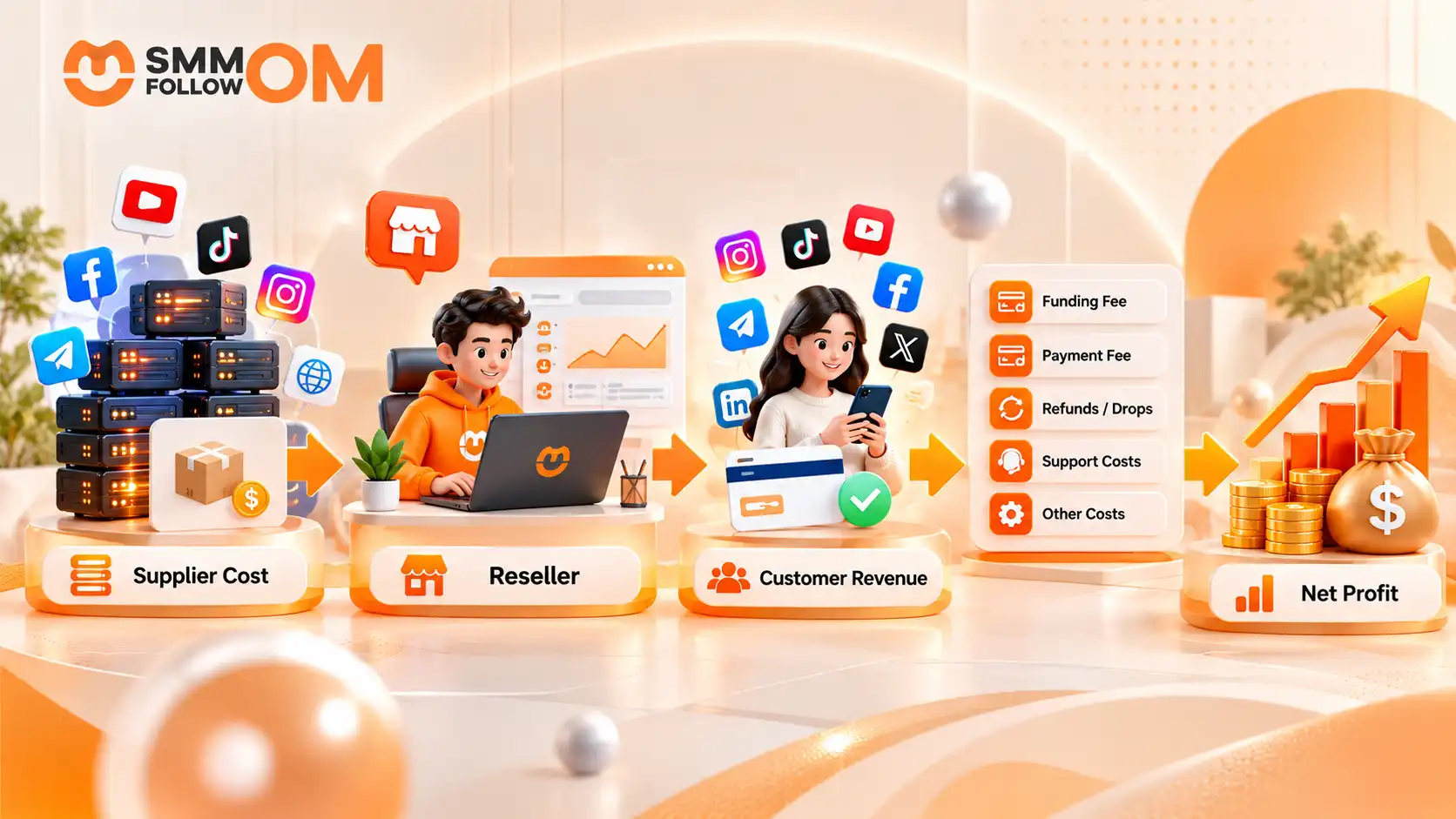
07OCT2026
How to Calculate Profit Margins in the SMM Panel Reselling Industry?
A 100% markup on an SMM service can leave you with a net margin of about 42% once funding and payment fees are counted, and less again after refunds or uncovered drops. The gap between those two numbers is what this guide calculates.
Read More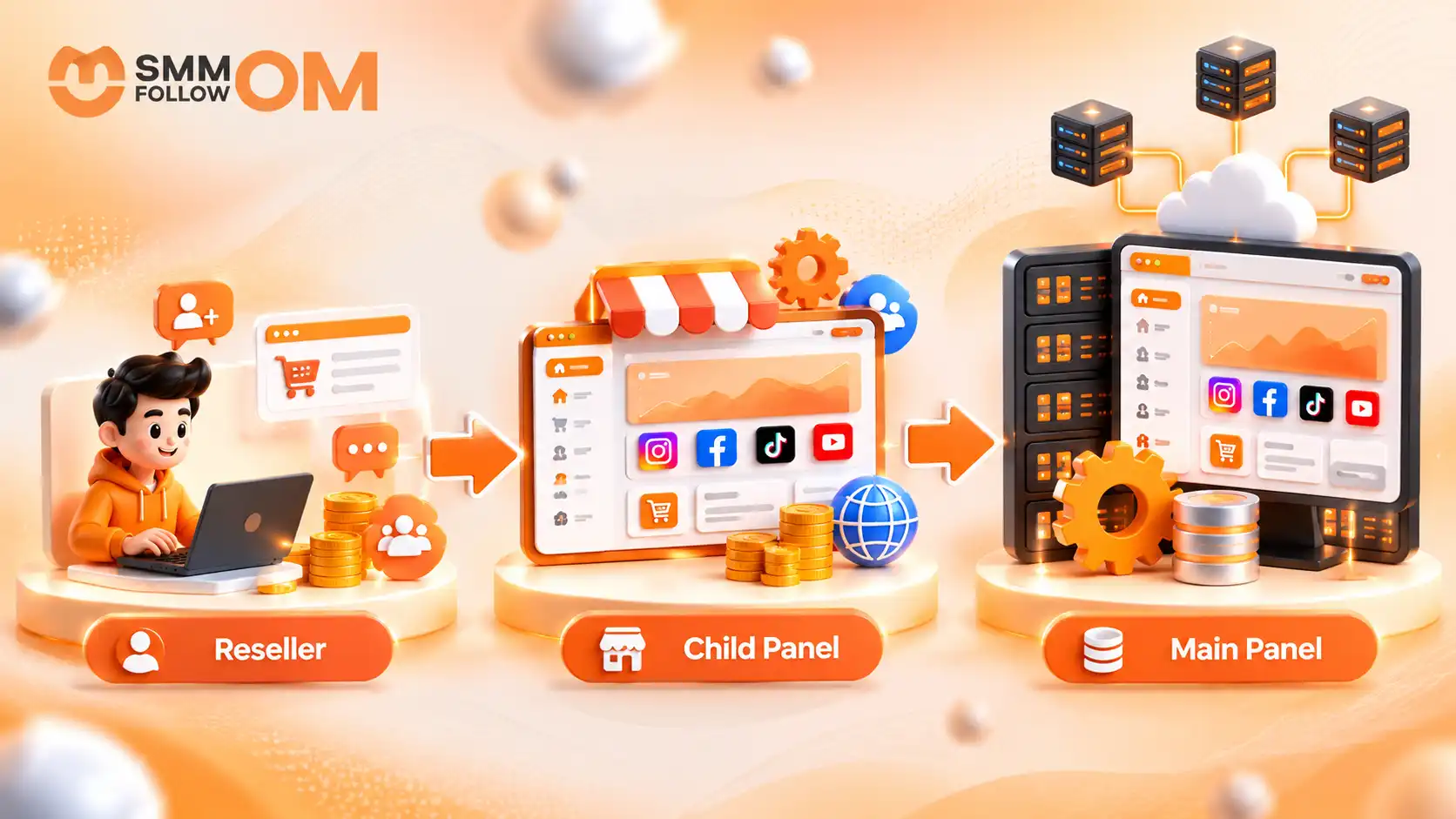
05OCT2026
Main Panel vs Child Panel vs Reseller in SMM: What's the Difference?
In the SMM panel business, a reseller sells another panel's services, a child panel rents a branded storefront from a parent panel, and a main panel runs its own panel software and supplier connections.
Read More