09OCT2026
How to Become an SMM Main Provider Instead of a Reseller?
Table of Contents
Becoming an SMM main provider means moving from buying services for resale to supplying services that other resellers, agencies, or panels can depend on. You need reliable service capacity, a wholesale ordering system, clear service rules, tested delivery, and a process for handling problems before you can scale.
This is not simply an upgrade from reseller to a bigger SMM panel. You are moving closer to the supply side of the social media marketing business, where other sellers may depend on your system to serve their own customers.
Step One: Check If You Are Ready to Move From Reseller to Provider
You are ready to consider becoming a provider when you already understand reseller operations and can take responsibility for other businesses' orders.
A reseller can usually wait for an upstream business to solve delivery problems. A provider cannot work that way. When another SMM panel buys from you, you become the business they contact when an order stops, a service changes, or delivery falls behind.
Before moving upstream, ask yourself whether you already know how to handle:
- Order statuses.
- Service limits.
- Customer complaints.
- Failed and Partial orders.
- Refill requests.
- Supplier communication.
- Balance management.
- Service changes.
- Support tickets.
You also need enough working capital to keep the operation running. A simple way to plan your working capital is to look at the most orders you expect in one day and work out what those orders will cost you. Then keep enough balance to cover a few days of orders.
This matters because reseller clients may place orders before adding more money. You need enough funds to cover that gap until their next deposit arrives.
Wholesale clients may send many orders before you receive enough new deposits to cover every cost immediately.
Your reason for becoming a provider matters too. Wanting a cheaper service rate is not enough. Move upstream when you want more control over service delivery and are ready for the responsibility that comes with it.
If you are still deciding between reseller, child-panel, and main-panel models, read Main Panel vs Child Panel vs Reseller: What's the Difference?
Where Your Supply Will Actually Come From?
Being a provider describes your position in the chain, not where every unit is produced. Most providers sit somewhere between three options.
You can buy at volume from upstream sources and pass better terms down, which is the fastest route but keeps you dependent on their delivery.
You can negotiate direct relationships with the sources behind a service. It can costs more to set up and usually requires committed volume. Or you can build and run your own capacity for a narrow set of services, which gives the most control and takes the most time.
Most providers mix these. The point is to know which services you actually control and which ones you are only passing through, because that difference decides what you can promise your wholesale clients.
Step Two: Choose Which Services You Can Supply Reliably
Start with a small group of services that you understand well instead of trying to supply every social media marketing category at once. A service is ready for wholesale use only when you understand how it behaves under repeated orders.
Check whether you can clearly define:
- What the service delivers.
- The accepted target link.
- Minimum quantity.
- Maximum quantity.
- Expected start time.
- Delivery capacity.
- Refill condition.
- Cancellation condition.
- Important service limitations.
Think about the buyer on the other side. If another reseller adds your service to their own SMM panel, their customers may start ordering it immediately. Your service information therefore needs to be clear enough that the reseller can sell it without guessing.
Do not keep an unstable service active just because it is cheap or popular. A service that creates constant problems can damage several reseller relationships at once.
Step Three: Build a System That Can Accept Wholesale Orders
A provider needs a system that lets business clients submit orders, fund their accounts, and check what is happening without relying on manual messages for every transaction. Your provider-side setup should be able to manage:
- Client accounts.
- Account balances.
- Service IDs.
- Order IDs.
- Order submission.
- Order history.
- Status updates.
- Refill requests where available.
- Cancellation requests where supported.
- Activity logs.
The system should make it easy to connect a client order with the exact service and status behind it.
For example, when a reseller contacts you about a stuck order, you should be able to find that order quickly, see when it entered the system, check its current status, and decide what action is needed.
Many wholesale clients will also want automation. API access can let another SMM panel send orders and receive status updates without entering each order manually.
Most reseller panels expect the common API v2 format, with actions for services, add, status, balance, refill and cancel. If your API follows it, a panel owner can connect you in minutes. If it does not, many will not bother.
Your job at this stage is to make wholesale ordering reliable and easy to track.
Step Four: Create Clear Wholesale Service Rules
Every wholesale service needs clear rules before other resellers start selling it. A service listing should tell the buyer what they are getting and what limits apply.
Write all of that down as a published listing, plus two things only the wholesale buyer needs: the service name they will see in their own panel, and your wholesale rate.
A clear listing looks something like this:
- Instagram Followers, HQ, R30
- Start: 0 to 2 hours. Speed: about 5,000 per day
- Min 100, Max 50,000. Target: public profile link
- Refill: 30 days. Cancel: allowed before start
- Wholesale rate: $0.95 per 1,000
Avoid vague service names that force buyers to open support tickets just to understand what they are ordering.
The same applies to pricing. Your wholesale rate needs to leave room for your own operating costs while still giving resellers space to set their retail price. Clear service rules reduce confusion before an order reaches your system.
The safest way to set that rate is to [price from your effective cost rather than the rate card], so funding fees and refills are already inside it.
Step Five: Test Every Service Before You Offer It to Resellers
Do not let another reseller become the first person to discover that one of your services does not work properly.
Run your own test orders before opening a service to wholesale clients. Check:
- Whether the order starts.
- Whether the target format works.
- Whether the expected quantity arrives.
- Whether the status changes correctly.
- Whether the minimum and maximum rules work.
- Whether Partial orders are recorded properly.
- Whether refill works when the service includes it.
- Whether repeated orders remain stable.
One successful order is not enough to prove that a service is dependable. Test how it behaves across normal use and check it again when anything important changes.
You should also know when to remove or pause a service.
Step Six: Start With a Small Group of Wholesale Clients
Begin with a limited number of resellers, agencies, or panel owners so you can find problems before order volume becomes difficult to control.
Your first B2B clients can show you issues that small internal tests may not reveal.
Watch how they use the system.
Check:
- Which services receive the most orders.
- Which instructions create questions.
- Whether balances update correctly.
- Whether order statuses are easy to understand.
- Whether support requests can be handled quickly.
- Whether your system stays stable under repeated orders.
These early clients also help you see whether your catalog is easy for another business to resell.
Do not accept every possible buyer only to increase volume quickly. A client sending large amounts of bad orders, unsupported targets, or constant disputes can create more work than revenue.
At this stage, volume is not the goal. Your goal is to prove that the provider operation works outside your own account.
Step Seven: Build a Provider Support Process
A provider needs a clear process for handling service problems because one bad order can affect a reseller and that reseller's customer at the same time.
Decide what happens when an order is:
- Stuck.
- Partial.
- Canceled.
- Waiting for refill.
- Showing the wrong status.
- Delayed because of capacity.
- Affected by a service outage.
Your team should know who checks the order, who makes the decision, and what information the reseller receives.
You also need rules for service-level problems. For example, decide when you will:
- Pause new orders.
- Remove a service.
- Inform active clients.
- Stop accepting a certain quantity.
- Change a service description.
- Escalate a technical issue.
Communication matters because wholesale buyers make decisions using your information. If a service has a problem and you leave it active without warning, the reseller may continue selling it to more customers.
The provider's job here is to respond quickly and stop one problem from spreading across more orders.
Step Eight: Scale Only After the Provider Operation Is Stable
Increase volume only after your current services, system, and support process can handle the existing workload without becoming less reliable. Before expanding, review:
- Order throughput.
- System uptime.
- Available service capacity.
- Support response.
- Client balance accuracy.
- API stability.
- Failed and Partial orders.
- Working capital.
- Service profitability.
Growth can expose problems that were invisible at low volume.
A service may work well with a few orders but struggle when many clients send orders at the same time. Support may also become a bottleneck even when the technical system works correctly.
Scale one part of the operation at a time.
You may eventually need stronger automation, more staff, additional service capacity, or backup fulfillment options.
Final Thoughts
Becoming an SMM main provider means becoming reliable enough for other businesses to depend on your services. Start with a small catalog, build a system you can control, test every service, prove the process with a few wholesale clients, and scale only when the operation stays stable.
Frequently Asked Questions
Can an SMM Provider Still Sell Directly to Retail Customers?
Yes. A business can have wholesale and retail customers if its setup supports both. Keep the pricing, support rules, and client experience clear so the two sides do not create confusion.
Can a Main Provider Still Buy Services From Other Providers?
Yes. Operating as a provider does not always mean every service is created or fulfilled entirely inside one business. What matters is being clear about what you control and what another upstream business still controls.
Do I Need a Separate Brand for My Provider Business?
Not always. You can use an existing brand if it fits the wholesale business. A separate brand may make sense when you want retail customers and reseller clients to have different pricing, support, or positioning.
Should Every Reseller Be Allowed to Use My Provider System?
No. Wholesale access can be limited to clients who understand your service rules and use the system properly. Basic client approval can reduce misuse, repeated bad orders, and avoidable support problems.
What Should I Do If a Service Becomes Unstable?
Pause new orders until you understand the problem. It is better to temporarily remove an unreliable service than allow more reseller orders to build up while delivery is failing.
Share this on social media


Recently Posted Blogs
07OCT2026
How to Calculate Profit Margins in the SMM Panel Reselling Industry?
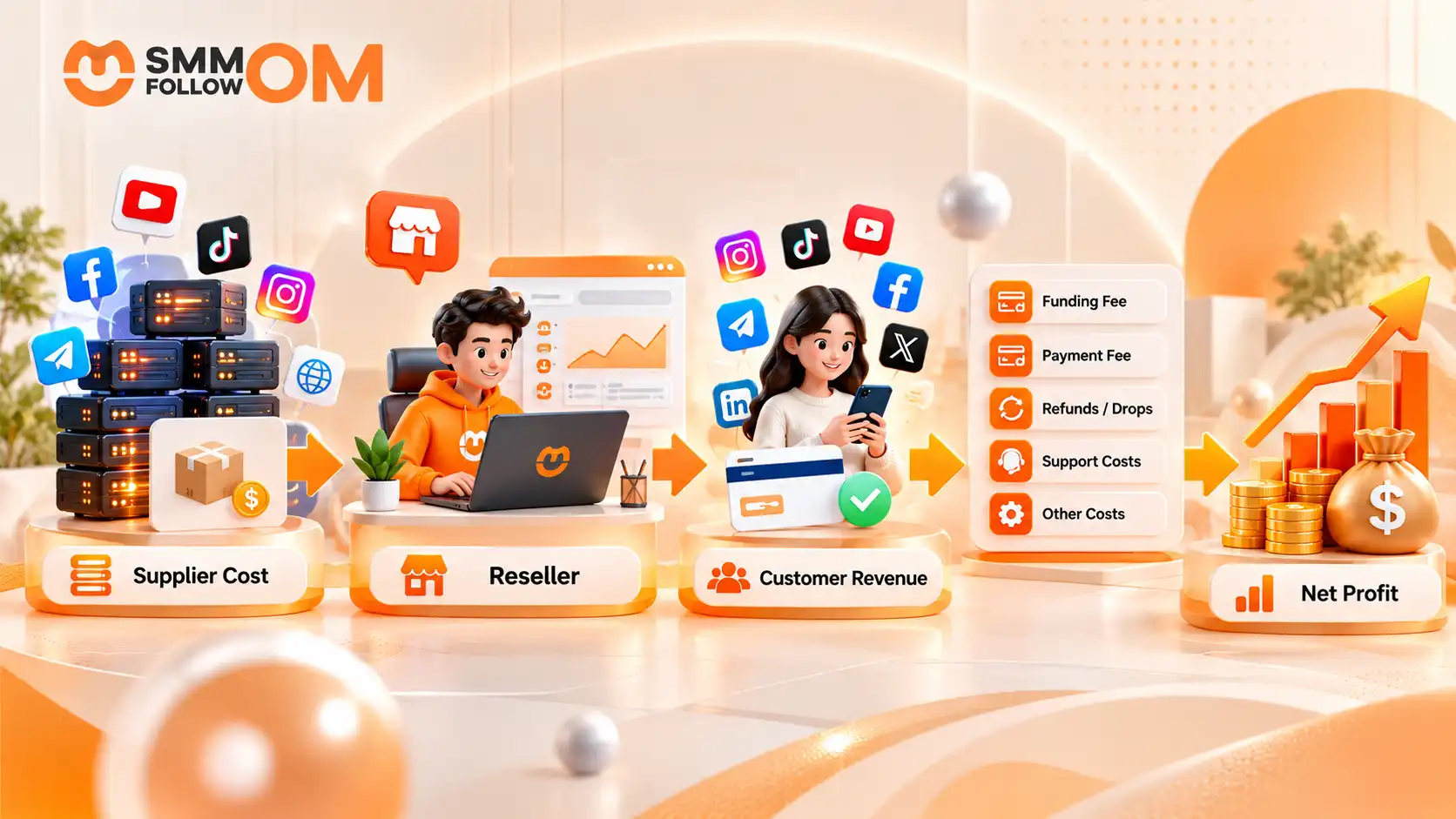
A 100% markup on an SMM service can leave you with a net margin of about 42% once funding and payment fees are counted, and less again after refunds or uncovered drops. The gap between those two numbers is what this guide calculates.
Read More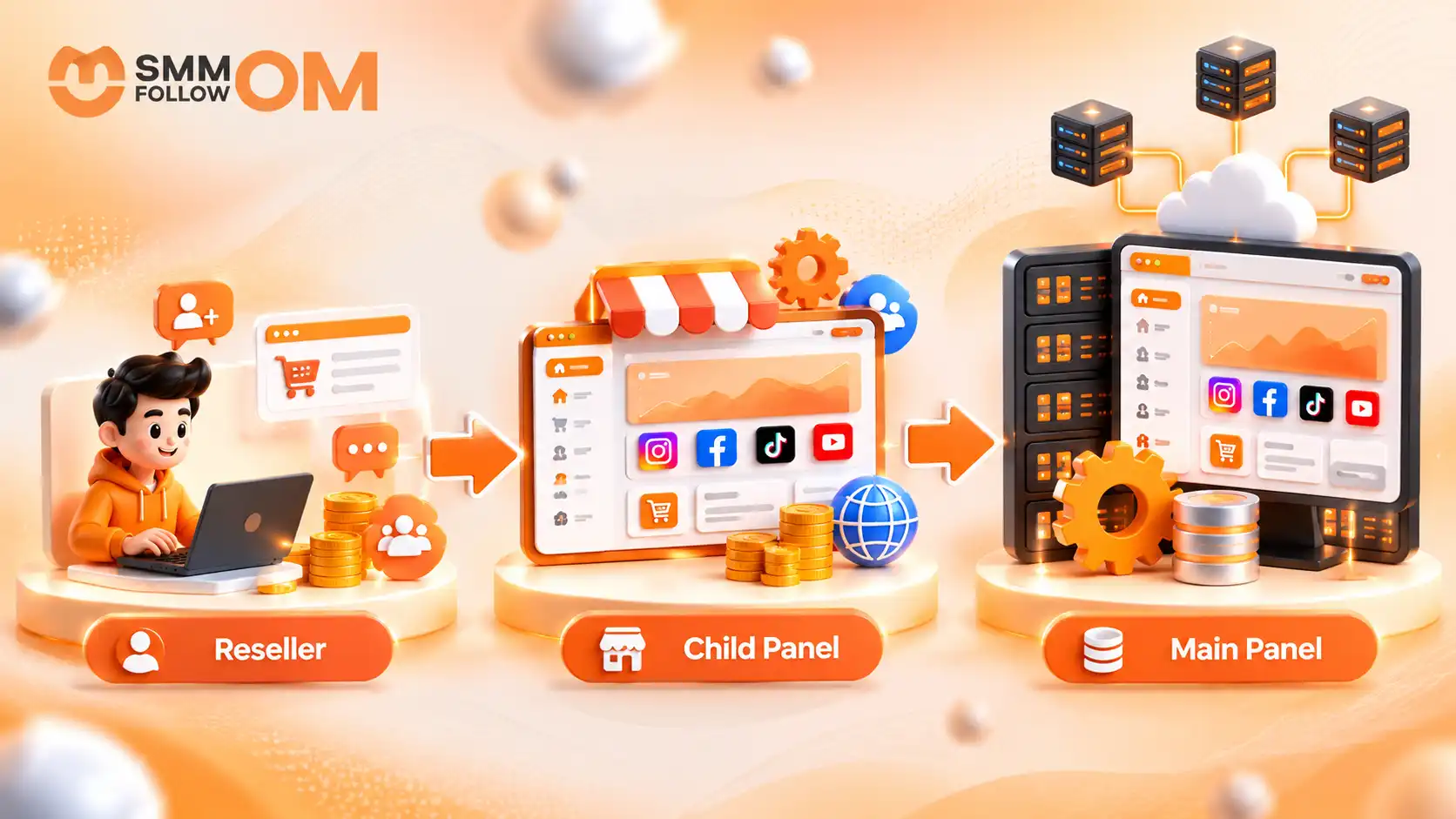
05OCT2026
Main Panel vs Child Panel vs Reseller in SMM: What's the Difference?
In the SMM panel business, a reseller sells another panel's services, a child panel rents a branded storefront from a parent panel, and a main panel runs its own panel software and supplier connections.
Read More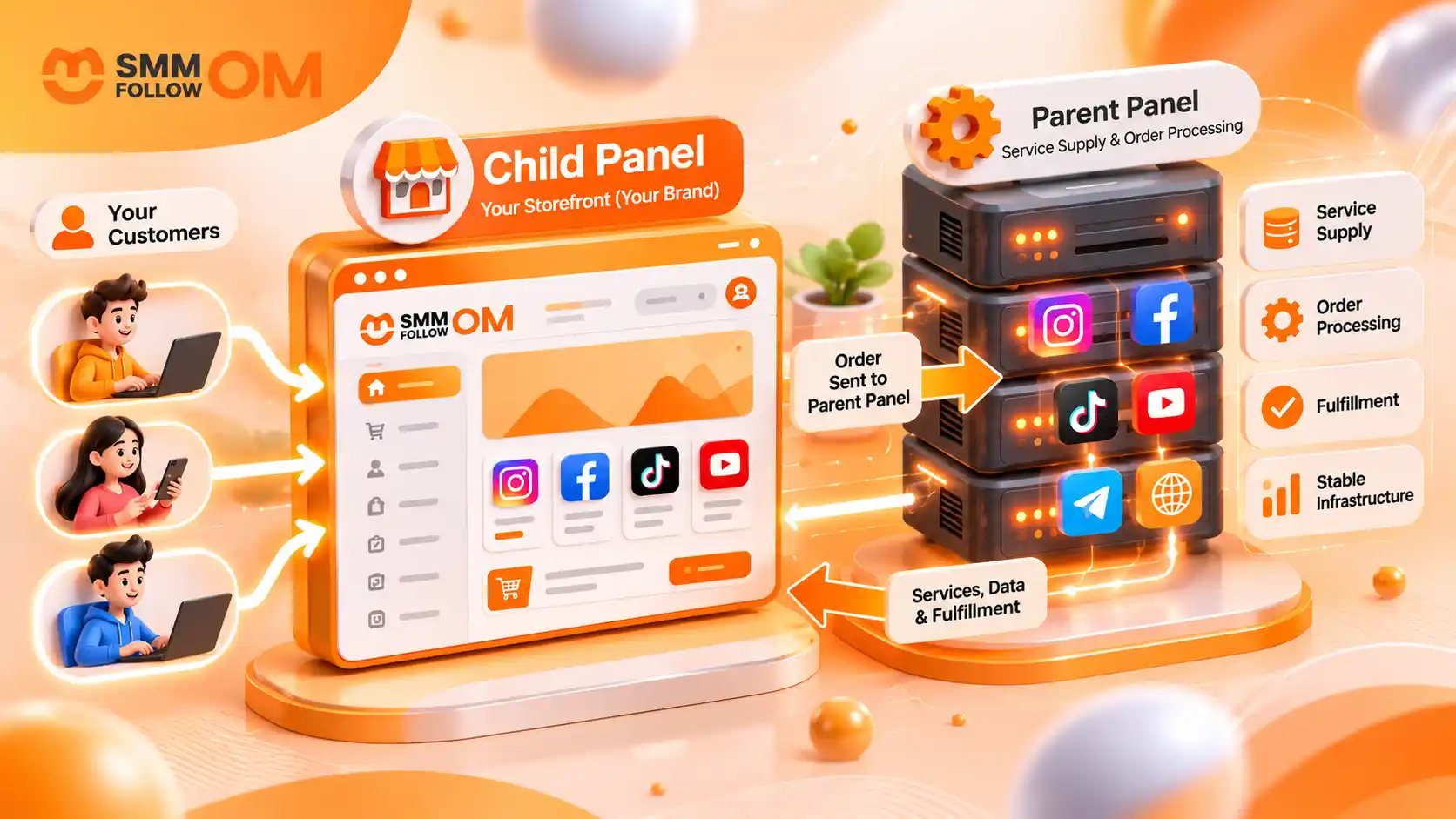
03OCT2026
What Is a Child Panel in SMM Panel? How It Works for Resellers
A child panel in SMM is a branded reseller panel that depends on a larger parent panel for much of its service supply, order processing, or backend infrastructure. The child panel is your storefront, and the parent panel is the engine behind the store. Your customers deal with your brand, but you do not necessarily control every provider, service, or technical system responsible for fulfillment.
Read More