05OCT2026
Main Panel vs Child Panel vs Reseller in SMM: What's the Difference?
Table of Contents
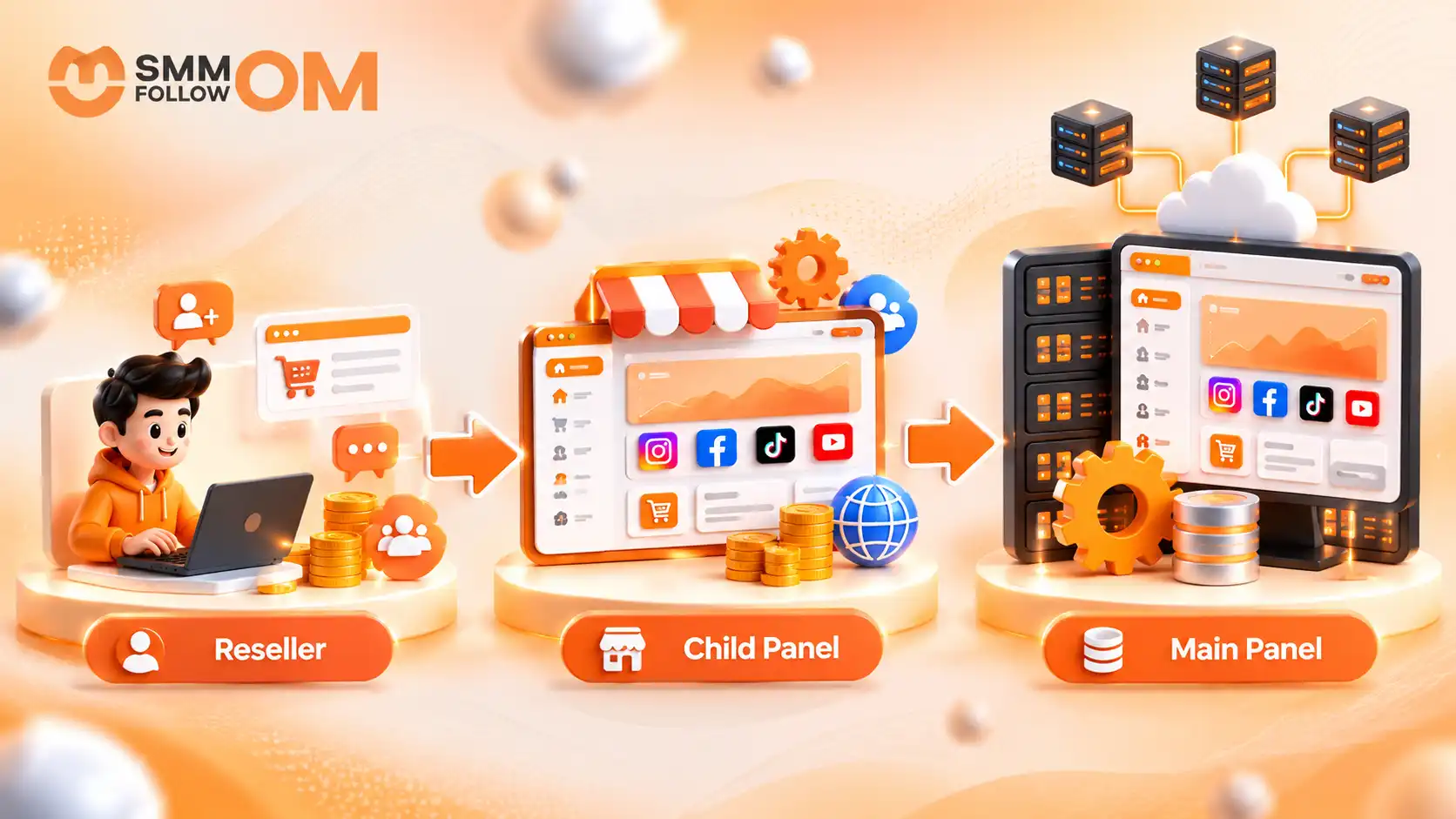
In the SMM panel business, a reseller sells another panel's services, a child panel rents a branded storefront from a parent panel, and a main panel runs its own panel software and supplier connections.
The right choice depends on how much control you need over branding, customers, service supply, technical systems, operating costs, and future growth.
Main Panel, Child Panel and Reseller Compared
The main difference is how much of the business system you control yourself. Here is how the three compare side by side:
Who Controls the Business in Each Model?
Control increases as you move from basic reselling toward operating more of the panel infrastructure.
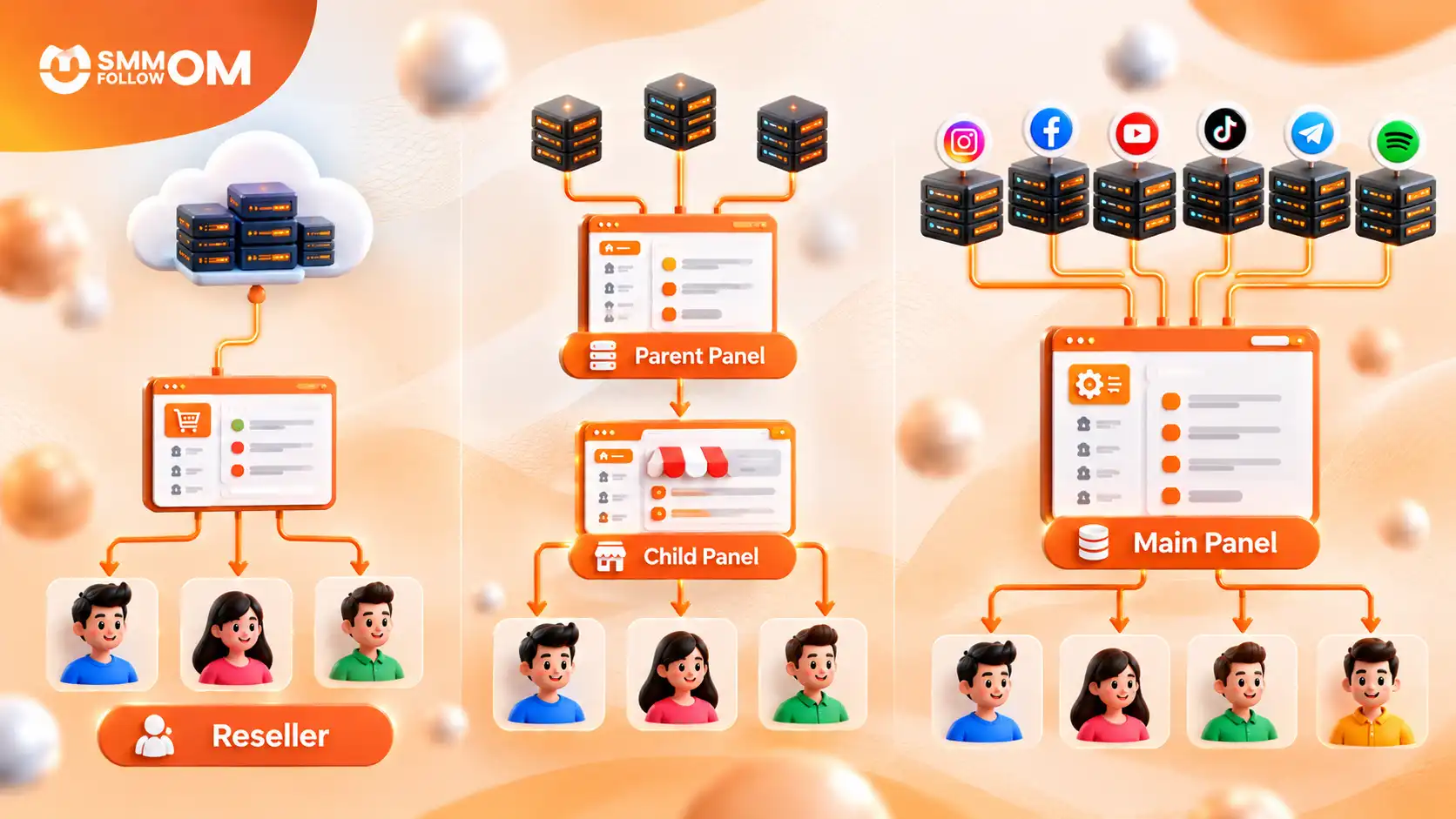
A reseller controls the commercial side of the relationship. That can include choosing what to sell, deciding the retail price, communicating with customers, and handling support. The reseller normally does not control how the upstream service is routed or maintained.
A child-panel owner controls more of the customer-facing environment.
Depending on the setup, this can include the domain, logo, service visibility, customer accounts, prices, support, and parts of the payment experience. A main-panel operator takes responsibility for more of the system itself.
That can include service organisation, supplier connections, routing decisions, backend settings, integrations, and operational rules.
The practical question is not which one looks more professional. It is which parts of the business you want to control and maintain yourself.
Which Model Gives You More Branding and Customer Control?
A child panel creates the biggest jump in branding between basic reselling and operating a fuller panel environment.
A reseller panel can still build a brand, but customers may place orders manually or through systems the reseller doesn't fully control.
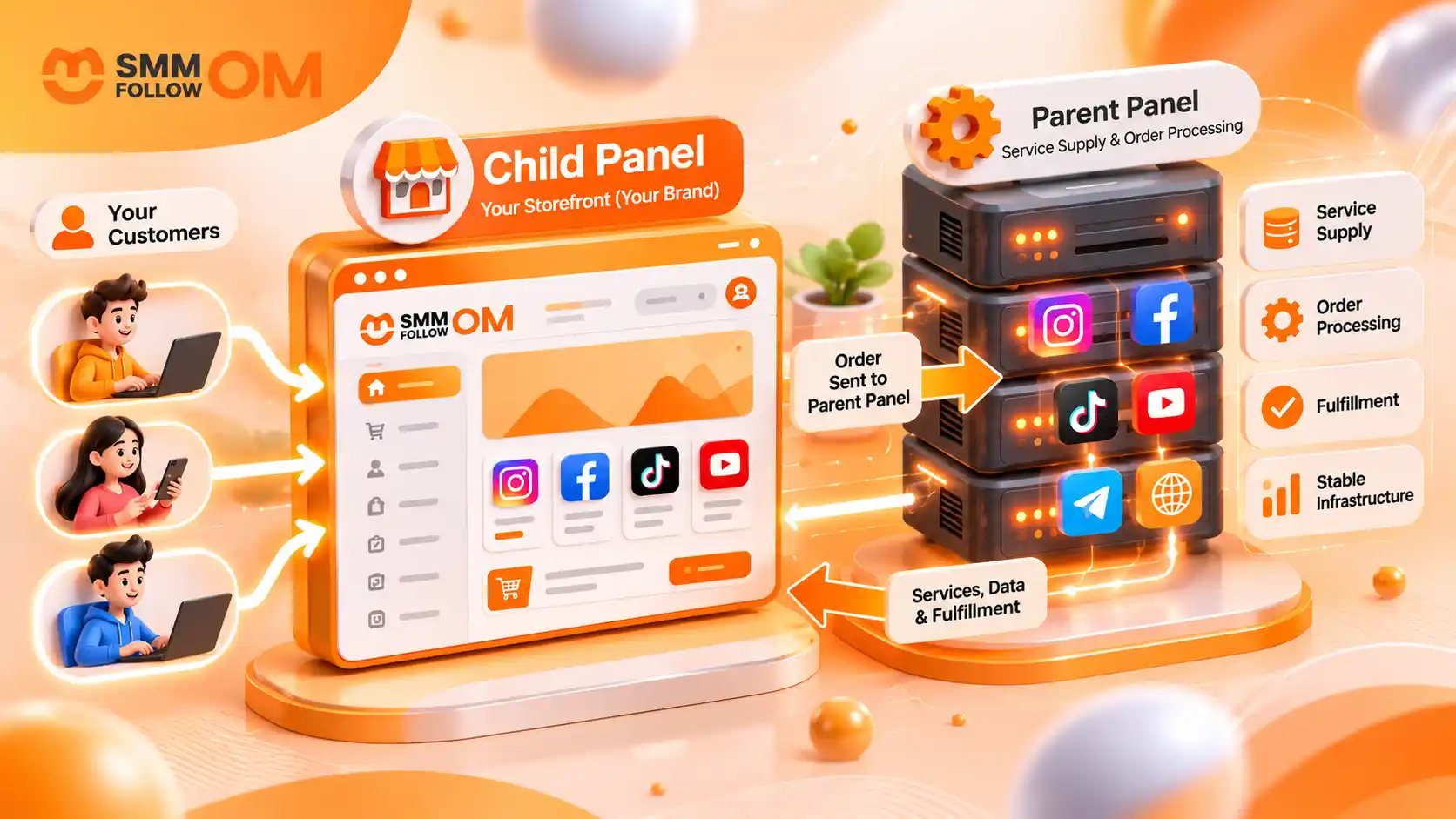
A child panel works as a white-label storefront, giving customers a dedicated branded environment with everything the customer touches carrying the reseller's own identity. A main panel can combine customer-facing branding with more control behind that interface.
The important distinction is that owning the customer experience does not automatically mean owning the backend system.
Who Controls the Providers and Service Supply?
Provider control separates these models more clearly than branding does.
A reseller normally works with the services made available by the panel or suppliers they choose to buy from. They can switch suppliers manually, but they do not necessarily control how an individual panel routes an order.
A child panel often inherits much of its service availability from its parent system.
A main panel can take a more active role in supplier management. Depending on its software and setup, the operator may connect multiple upstream providers, assign services to different sources, and maintain backup routes.
The operator also decides which services appear in the catalog.
A main panel is not automatically an original service provider. It can still purchase or route services from upstream companies.
If your goal is to move beyond panel operation and become part of the actual supply layer, read How to Become a Main Provider Instead of a Reseller.
Which Model Requires More Technical Work?
Technical responsibility rises as the business takes control of more infrastructure. A reseller can operate with little panel-side technical work because the upstream business maintains the ordering system and service infrastructure.
A child-panel owner may need to handle tasks such as domain configuration, branding, payment setup, service organization, customer pricing, and support settings.
The underlying panel software and much of the core infrastructure can remain managed by the child-panel provider or parent system.
A main-panel operator may need to manage hosting, software configuration, provider integrations, service synchronization, routing logic, maintenance, security, and uptime. The exact workload depends on whether the operator uses licensed panel software, managed hosting, custom development, or another setup.
API connections can automate service lists, order submission, balances, and status updates, but API implementation is a separate technical topic.
Which Model Costs More to Run?
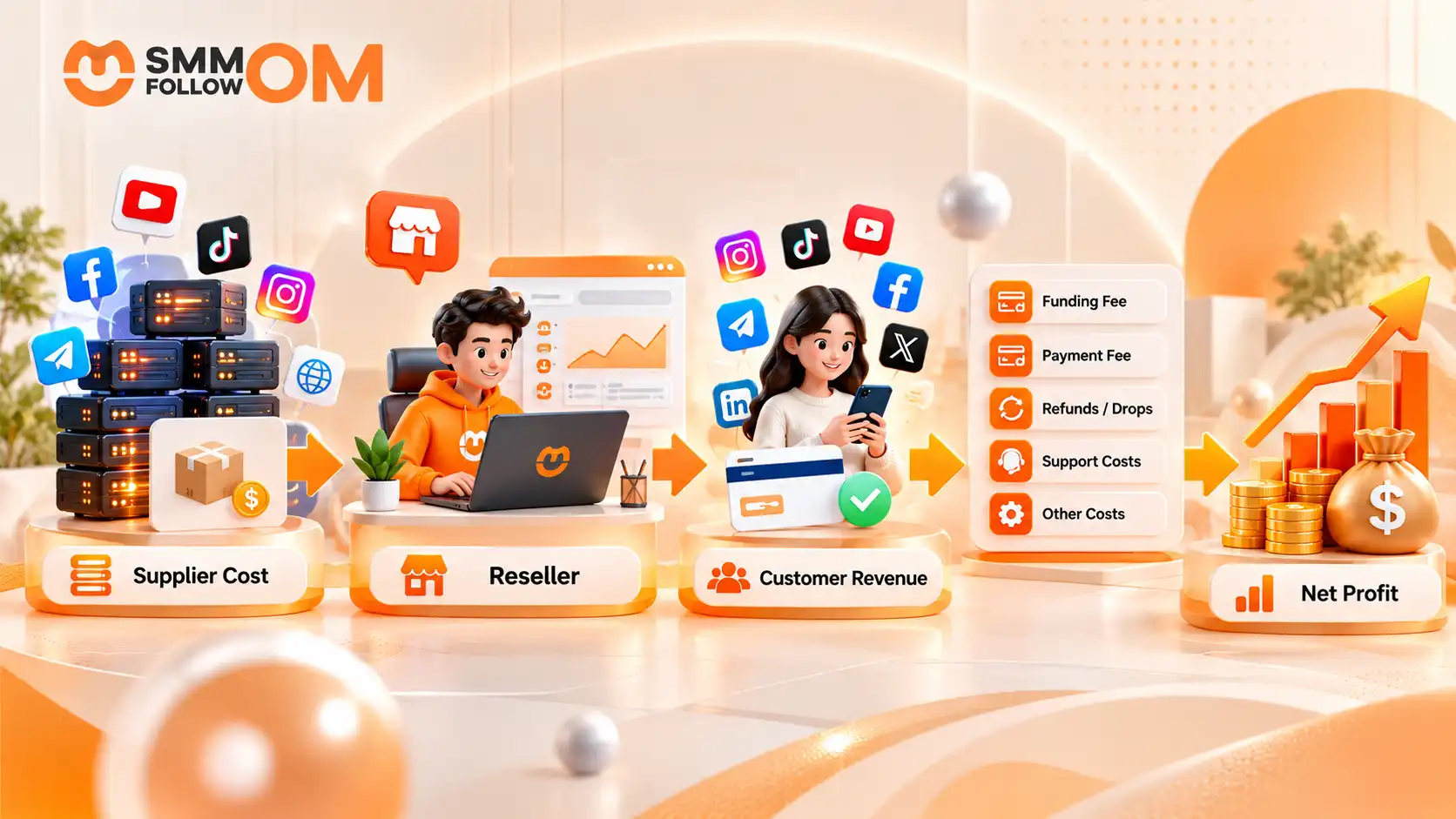
A reseller has the lowest running cost because another business maintains the panel. The main expense is service balance, plus payment fees, support time and whatever it costs to find customers.
A child panel adds a fixed monthly fee, usually $10 to $25, plus a domain. That fee buys a branded storefront and customer accounts, which only pays off once you have enough repeat customers to use them.
A main panel is a different scale of spending. Software starts around $50 a month and grows with order volume, and on top of that come integrations, possible custom development and balances spread across several suppliers.
Higher running costs only make sense if your margin can carry them, so work out what an order actually leaves you after fees before choosing the heavier setup.
Which Model Carries More Dependency?
A reseller carries the most supplier dependency, while a main panel has the most responsibility for managing its own operational risks. A child panel sits between the two because it controls the customer-facing brand but still relies heavily on a parent system.
Resellers are directly affected when an upstream panel changes prices, removes a service, or has delivery problems.
Child-panel owners face the same upstream exposure, but those problems appear to customers under their own brand.
A main panel can reduce dependence on a single upstream source by managing multiple suppliers or routes. In return, the operator becomes responsible for provider selection, outages, routing decisions, and system reliability.
Which Model Is Easier to Scale?
A child panel is usually easier to scale than a basic reseller setup, while a main panel offers more room for larger-scale operations. The right stage depends on what is currently limiting the business.
A reseller can grow without managing its own infrastructure, but manual ordering, customer balances, and support can become harder as volume increases.
A child panel improves scalability by giving customers their own accounts and a self-service ordering system, reducing some of that manual work.
A main panel becomes more useful when growth requires greater control over suppliers, routing, automation, or backend operations.
Which Option Is Best for You?
Choose based on the problem you need the business model to solve.
Choose a Reseller Model If You:
- Are starting with a small customer base.
- Want to test whether customers will buy.
- Prefer low technical responsibility.
- Can manage orders without a dedicated customer panel.
- Do not need direct control over supplier routing.
Think of a freelancer selling Instagram packages to five regular clients over WhatsApp. At that stage, reselling without any panel fee is the cheapest way to find out what clients reorder.
Choose a Child Panel If You:
- Already handle repeat customer orders.
- Want customers to use your own domain and brand.
- Need customer accounts and self-service ordering.
- Want more control over retail presentation.
- Prefer not to maintain the full backend yourself.
Consider a Main Panel If You:
- Need more control over supplier selection.
- Want to manage multiple service sources.
- Need custom routing or deeper automation.
- Have outgrown restrictions imposed by a parent system.
- Can take responsibility for additional technical operations.
If more than one list fits, start with the lowest one you match completely.
When Should You Move From Reseller to Child Panel or Main Panel?
Upgrade when your current model starts creating a measurable operational limitation.
Move from a reseller setup to a child panel when manually managing customers becomes inefficient and a branded self-service environment would remove that friction.
Consider moving beyond a child panel when parent-level restrictions prevent you from managing the suppliers, routing, software behavior, or integrations your business now requires.
Do not change models only because order volume has grown. If the existing system still handles your customers, support workload, and service requirements efficiently, adding more infrastructure can create work without solving anything.
Bottlenecks, not status therefore drive the useful upgrade path.
Final Thoughts
Pick the simplest model that gives your business enough control to operate properly. The upgrade that pays for itself is the one that removes a limit you are already hitting.
Frequently Asked Questions
Can One Company Use More Than One SMM Business Model?
Yes. A company can operate different setups for separate brands or customer groups if its suppliers and software allow it. The business should keep pricing, support responsibilities, and customer records clear between those operations.
Will Customer Accounts Transfer If I Change Panel Models?
Not automatically. Customer records, balances, order history, and other data depend on the export, migration, and software options available in the old and new systems. Check data portability before changing platforms.
Does a Child Panel Owner Own the Panel Source Code?
Not necessarily. Having your own domain and branded dashboard does not prove ownership of the software underneath it. Hosted child-panel arrangements can give you access to the system while another company controls the software.
Can a Main Panel Sell Child Panels to Other Resellers?
It can if the software and business setup support a child-panel or white-label layer. That capability is a product feature, not something every main panel includes automatically.
Are "Parent Panel" and "Main Panel" Always the Same Thing?
No universal naming standard applies across every SMM business. In child-panel setups, "parent panel" normally describes the upstream panel the child depends on, while businesses may use "main panel" more broadly for an independently operated panel environment.
Share this on social media


Recently Posted Blogs

24OCT2026
How to Increase Likes on Facebook: 12 Practical Ways
This guide explains 12 practical ways to increase Facebook likes in 2026, including creating original content, analyzing audience preferences, testing Reels, improving captions, posting at suitable times, and collaborating with relevant partners. It also covers paid promotion, purchased likes, performance tracking, and engagement analysis to help businesses improve visibility and understand what resonates with their audiences.
Read More
22OCT2026
How to Start an SMM Reseller Business in Bangladesh?
To start an SMM reseller business in Bangladesh, you buy social media services from a supplier panel at reseller rates, resell them to local customers at your own price in BDT, and keep the difference.
Read More
19OCT2026
How Much Does Facebook Reels Pay Per 1,000 Views?
You can earn $0.02 to $0.20 per 1,000 views, with many estimates closer to $0.05 to $0.10 per 1,000 Reel views. Numbers above $1 per 1,000 views almost always come from longer videos or a US finance-style audience, not from ordinary Reels. The variation depends on your niche and country. Also, higher numbers may mix Reels earnings with longer-video ad earnings, so they aren't always a good estimate for Reels alone.
Read More