15OCT2026
How to Improve Your Facebook Business Page: 13 Practical Steps
Table of Contents
Facebook is still the largest social platform in the world, with over 3 billion monthly users at Meta’s last published count. That reach is why the Page itself needs to work, not just the posts you put on it.
First, optimize your Facebook page.
To improve your Facebook Business Page, focus on strong branding, better search visibility, regular, useful content, and consistent audience engagement.
Many businesses skip that first part. They keep posting while the Page still has an old cover photo, an incomplete About section, the wrong phone number, or a weak CTA. They get no results, of course. So, before running the page, do those things.
1. Use a Clear Page Name and the Right Category
Keep the Page name close to the real business or brand name. Avoid adding a long string of keywords just to appear in more searches.
A simple name is easier to remember and looks more professional, like this-
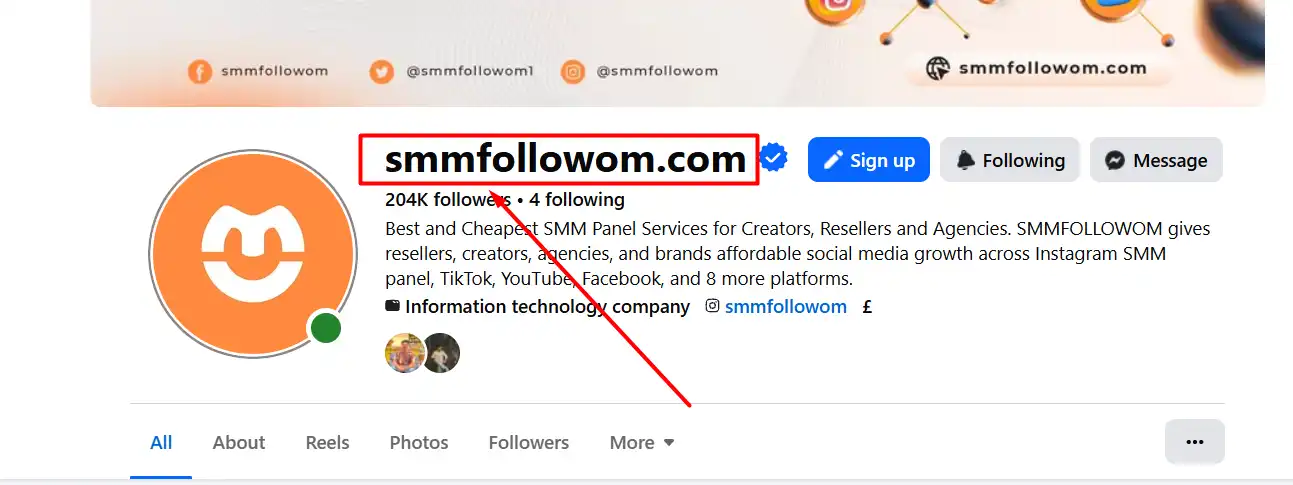
The category matters too. Choose the option that best matches what the business actually does. If you run a restaurant, salon, consultancy, e-commerce store, agency, or local service company, use the most accurate category available.
This helps Facebook understand the Page and gives visitors more context when they find it.
2. Optimize Your Facebook Page URL
A clean username gives the Page a better-looking URL. Something like:
https://www.facebook.com/smmfollowom
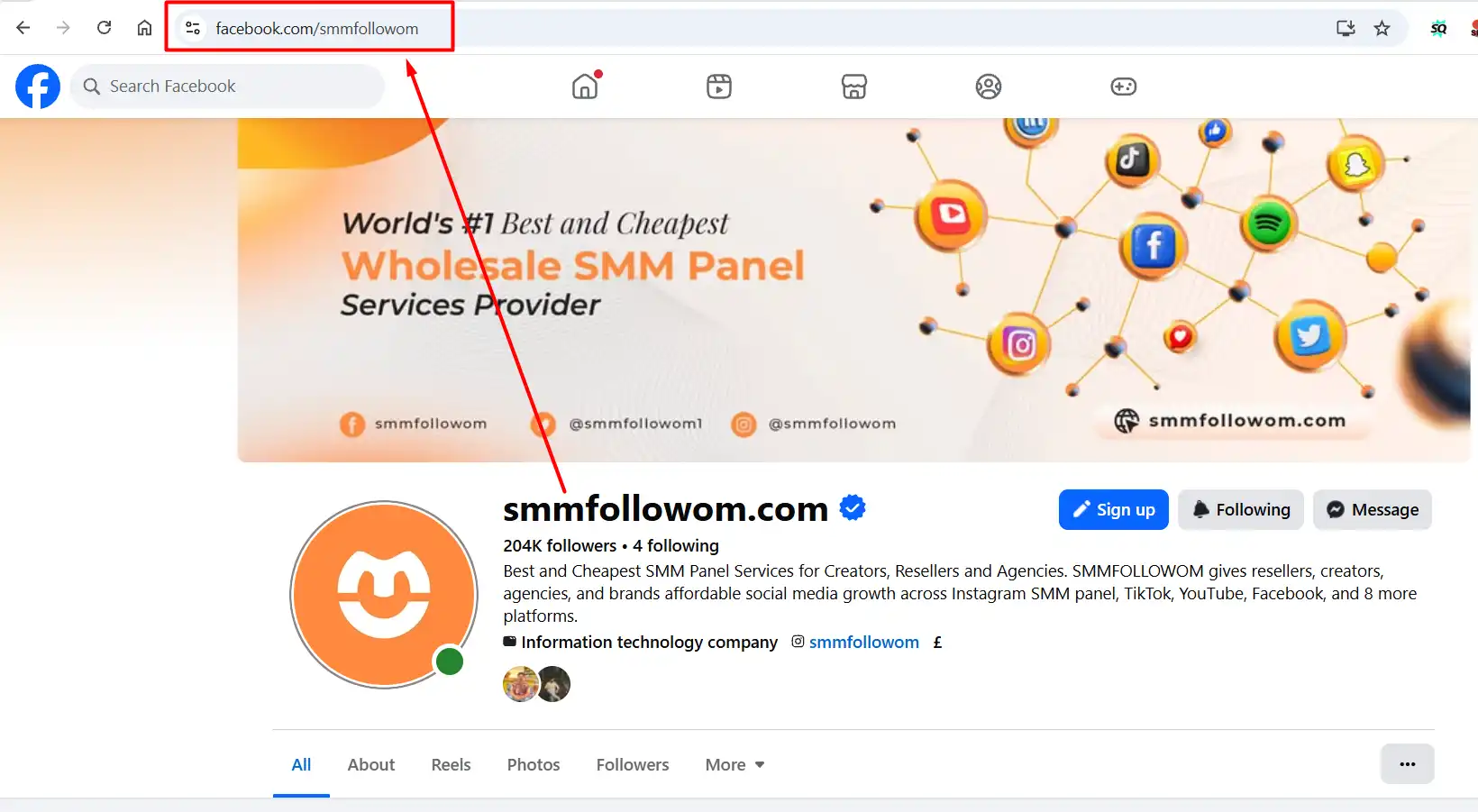
is much easier to remember than:
facebook.com/smmfollowom489273
Try to use the business name or a close variation. Avoid random numbers and unnecessary words.
If possible, keep the username similar across your other social platforms. This makes the brand easier to recognize and helps customers find it again.
Once the username is set, check the URL yourself. Make sure it opens the correct Page and is easy enough to share in emails, on your website, or on printed material.
3. Rewrite the About Section
The About section should answer the basic questions quickly. What does the business do? Who does it serve? Where does it operate? Avoid vague descriptions such as:
We provide the best service at affordable prices.
That sounds positive, but it tells the reader almost nothing. A better description is specific:
Accounting and tax services for small businesses across Melbourne.
or:
Handmade skincare products for sensitive and dry skin.
Use plain language. Add the main service, location, audience, or speciality if it helps people understand the business faster.
4. Keep Your NAP Information Consistent
NAP means Name, Address, and Phone number.
BrightLocal found that 62% of consumers would avoid a business if they found incorrect information online, while 56% check whether business details match across different sources.
These details should match across Facebook, your website, Google Business Profile, and other important listings. Also check your opening hours, website URL, email, and service area; mention those like this-
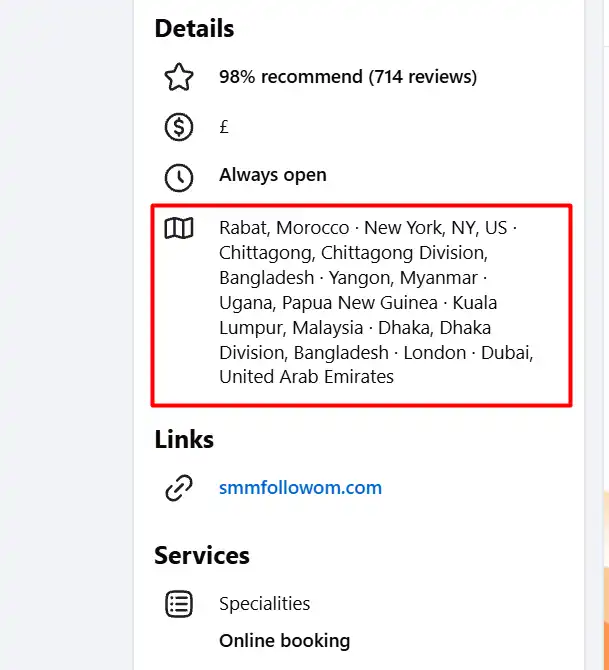
Small differences create unnecessary confusion. If Facebook shows one phone number and the website shows another, a customer may wonder which one is current.
For local businesses, consistency also helps search platforms connect different profiles with the same company.
A simple way to manage this is to check your major listings every few months and compare the details side by side.
5. Improve the Profile Picture and Cover Photo
Make the profile picture easy to recognize, even when Facebook shows it small. For most companies, a clean logo works well. For a personal brand, consultant, coach, or creator-led business, a professional photo work better.
The cover photo gives you more space. Use it to show what the business is about.
A restaurant might show a signature dish. A real estate company could feature a property. A gym might show the training environment. A software company could use a clean product visual.
Check it on mobile too. A cover image can look perfect on desktop and lose important details when Facebook crops it on a phone.
6. Choose the Right Call-to-Action Button
The main CTA should match the action you actually want visitors to take.
A salon may want Book Now. A local service business may prefer Call Now. An online store may use Shop Now. Other businesses may get better results from Send Message, WhatsApp, or Learn More.
There is no single best button for every Page.
Think about what normally happens just before someone becomes a customer.
Then test the button yourself. Make sure the phone number works, the booking page loads, or the website goes to the right place.
A CTA is only useful when the next step works.
7. Pin a Post That Helps New Visitors
The pinned post should earn its place at the top of the Page. Use it for something a first-time visitor should see.
That could be your main service, current offer, booking process, product launch, important announcement, customer success story, or a simple introduction to the business.
Ask yourself:
If someone reads only one post before deciding whether to contact us, which post should it be?
That is usually the one worth pinning.
Review it regularly. An old promotion or expired announcement can make the Page look neglected.
8. Post Content People Actually Want to See
A business Page should not feel like a stream of advertisements.
People need a reason to follow, even when they aren't ready to buy.
A good content mix can include useful advice, customer questions, behind-the-scenes work, product demonstrations, before-and-after examples, industry updates, customer stories, and occasional promotions.
The right topics depend on the business.
A restaurant might show how a dish is made. A lawyer might explain a common legal question in simple language. A fitness business could share exercise tips. A retailer might compare two products.
Use Reels, photos, Stories, videos, and text when they fit the idea. Do not force every format into the schedule.
The content itself matters more than ticking every Facebook feature off a list.
9. Give People a Real Reason to Engage
Adding “Comment below” does not automatically make a post engaging.
Ask something specific.
Instead of:
What do you think?
try:
Which matters more when choosing a hotel: location or room size?
The second question gives people something clear to respond to.
You can also start conversations with polls, short questions, customer feedback, and common objections.
Pay attention to the questions people already ask in comments and messages. Those are often better content ideas than anything you could invent from scratch.
And when people respond, answer them. A business Page feels much more active when the conversation goes both ways.
10. Make Messaging Easier for Customers
If people use Facebook to contact your business, you need to monitor your inbox.
You can use instant replies for simple questions and away messages when nobody is available. Saved responses also help when customers repeatedly ask about prices, opening hours, booking details, delivery areas, or availability.
Keep those replies short.
Automation should speed up customer service, not make it more frustrating.
A simple question can use a saved answer. A complaint, payment issue, or unusual request usually needs a real person.
If WhatsApp is important to the business, connect it where appropriate and make sure someone actually checks it.
11. Ask for Reviews and Respond to Them
Reviews can answer a question every new customer has:
Can I trust this business?
Ask real customers for feedback after a purchase, booking, or completed service.
Do not make the request complicated. A short message works.
When someone leaves a positive review, thank them. When the feedback is negative, respond calmly and deal with the actual issue.
Do not argue publicly.
A thoughtful response to a complaint can show more professionalism than pretending unhappy customers never exist.
Avoid fake reviews too. Facebook Pages use Recommendations rather than star ratings, so what visitors actually read is the written reason someone recommended you. A few detailed recommendations carry more weight than a pile of one-line positive ones.
12. Promote the Page Where Customers Already Know You
Not every new follower has to come from Facebook itself.
Existing customers already interact with the business through your website, email, physical location, newsletter, or other social accounts.
Make the Facebook Page easy to find there.
You might add it to your website footer, email signature, newsletter, packaging, business cards, or other social profiles.
The reason to follow matters too.
“Follow us on Facebook” is easy to ignore.
Something like:
Follow us for new products, weekly tips, and company updates.
Gives people a reason. Smmfollowom’s Facebook SMM panel services can add visibility to a Page or post, though that visibility only pays off once the Page itself is ready to convert it. First, make sure the Page is ready for the extra traffic.
13. Use Facebook Insights to Decide What to Improve
Do not judge success only by follower count. That applies to paid growth too. If you use an SMM panel to add followers or views, judge it by the enquiries and link clicks that follow, not by the number it adds.
Look at what people actually do.
Reach can tell you how many people saw the content. Comments and shares can show which topics create interest. Link clicks show whether posts move people toward your website. Messages may matter more for a service business. Watch time matters more when video is a major part of the strategy.
If your Page qualifies for creator payouts, the Monetization tab adds qualified views and Earnings Rate to that list, and our breakdown of how Facebook monetization works explains what each number means.
Once a month, compare your strongest posts with your weakest ones.
Look at the topic, format, first line, visual, CTA, comments, shares, clicks, and watch time where relevant.
You are looking for patterns.
If educational posts consistently bring more shares, make more of them. If product videos bring more website clicks than static images, test more video. If promotional posts keep getting ignored, change the approach instead of publishing more of the same.
Use the Page data to decide what happens next.
Frequently Asked Questions
Can I Change My Facebook Page Name Later?
Yes, but Facebook reviews the request first, so it isn't instant. The new name has to represent the same business, so a genuine rebrand usually goes through while a switch to an unrelated name often does not. Facebook also limits how often you can change it, so settle on the name instead of testing options.
Can I Merge Two Facebook Business Pages?
Facebook allows merging in some cases, usually when both Pages represent the same business and have similar names and locations. Followers and likes combine, but posts, photos and reviews from the second Page do not carry over. Check Facebook’s current requirements before starting, since the conditions change.
Why Has My Page Reach Dropped?
A drop usually has more than one cause. Posting less often, a shift in what the audience responds to, or a run of posts that got little early engagement can all pull reach down. Before changing the whole approach, check whether link clicks and messages dropped too. Reach falling while enquiries stay steady is a much smaller problem than it looks.
How Many People Should Have Admin Access to the Page?
As few as possible, and only people who still work with the business. Facebook offers different access levels, so someone who only replies to messages does not need full admin control. Review the list whenever a person leaves, because a Page with a single admin who loses their account is very hard to recover.
Can I Schedule Facebook Posts Without Paying for a Tool?
Yes. Meta Business Suite includes free scheduling for Pages, so you can write several posts at once and set the dates. Paid tools mainly add extras like approval workflows, bulk uploads and reporting across several platforms. For one Page, the free option is usually enough.
Conclusion
Before posting anything new, open your Page as if you were a customer seeing the business for the first time. Give yourself 30 seconds to find what the company does, where it operates, how to contact it, and what action to take next.
If any of those answers are hard to find, fix that first. A better post can bring someone to the Page, but the Page still has to turn that visit into trust and action.
Share this on social media


Recently Posted Blogs

13OCT2026
How to Monetize a Facebook Page: Requirements, Methods & Earnings
To monetize a Facebook Page, use a Page or a profile in Professional Mode, stay within Meta’s monetization policies, and turn on whichever tools your Monetization dashboard unlocks: Content Monetization (invite-based), Stars (500 followers for 30 days), Subscriptions, or paid brand partnerships.
Read More
11OCT2026
How Can an SMM Reseller Build Passive Income Without Their Own Panel?
An SMM reseller builds passive income by handing the repeated parts of every sale to automation: a chatbot takes the order, a supplier API places it, prepaid credit removes payment checks, and alerts bring only the problems to you. The result is semi-passive, not hands-off. Once it runs, a reseller handling 30 orders a day spends minutes on the business instead of hours.
Read More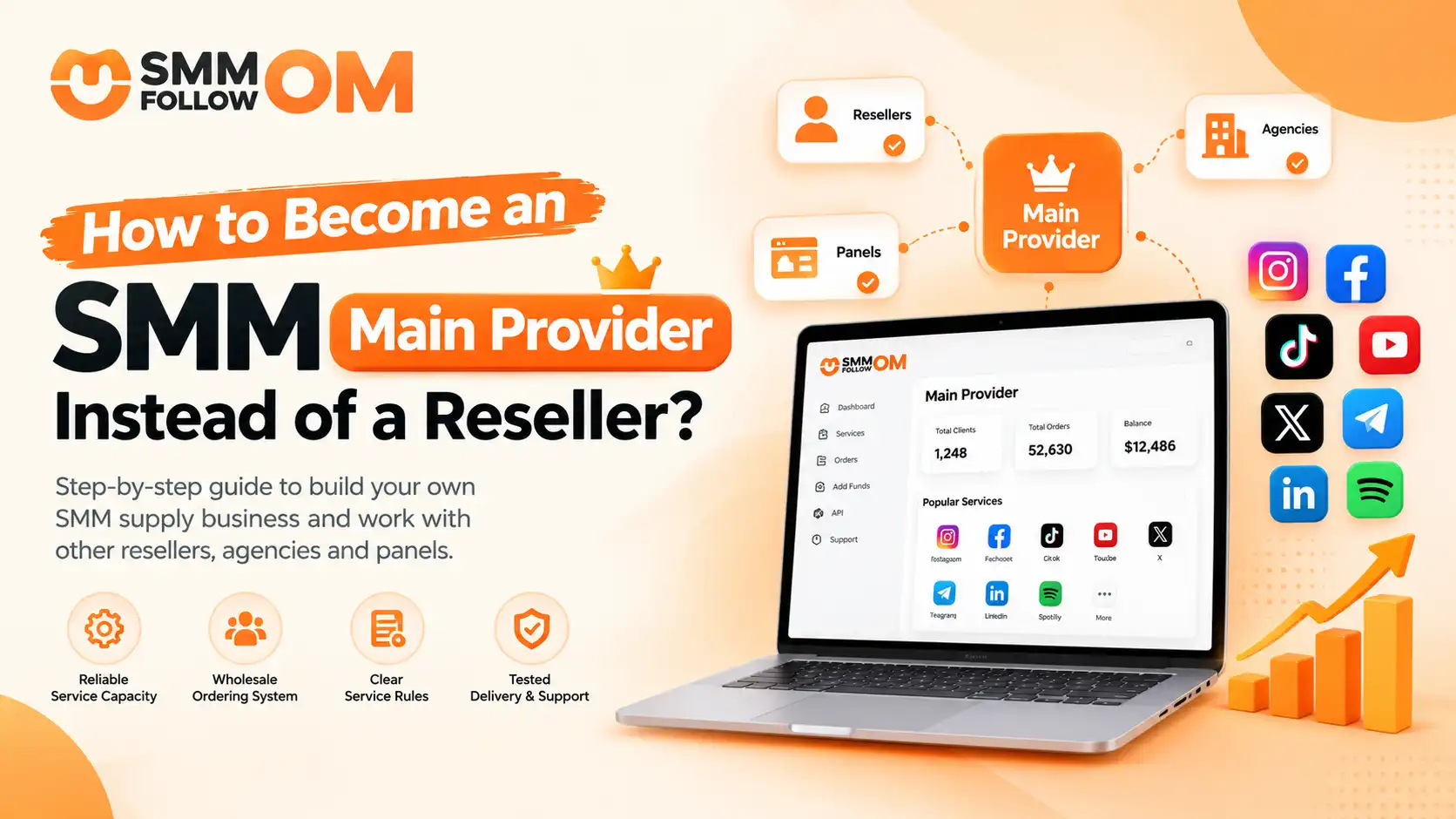
09OCT2026
How to Become an SMM Main Provider Instead of a Reseller?
Becoming an SMM main provider means moving from buying services for resale to supplying services that other resellers, agencies, or panels can depend on. You need reliable service capacity, a wholesale ordering system, clear service rules, tested delivery, and a process for handling problems before you can scale.
Read More