27OCT2026
What Is TikTok Marketing? Types, Benefits & Strategy
Table of Contents
TikTok marketing means using TikTok to introduce people to a business, build interest in its products or services, and move the right viewers toward an action. That action could be following the account, visiting a website, submitting a lead, downloading an app, or buying a product.
It is broader than simply uploading short videos. A business can reach people through its own content, creator partnerships, paid advertising, TikTok Search, and shopping features.
The important part is choosing the method that fits the business. A local service company doesn't need the same TikTok plan as a beauty store, and an ecommerce brand doesn't need to copy a personal creator's approach to get views.
How the TikTok Algorithm Works
TikTok recommends videos based on how relevant they seem to each user. It looks at signals such as watch time, full views, skips, likes, comments, shares, follows, and video-related information.
The platform does not publicly confirm that every video first goes to exactly 200-500 people or follows a fixed “test batch” system. A safer way to understand it is:
Upload video → TikTok identifies likely viewers → people watch or skip → TikTok learns from those actions → distribution adjusts
TikTok says user interactions generally carry more weight than basic device or location information, but there is no public fixed ranking such as “shares are always more important than comments.”
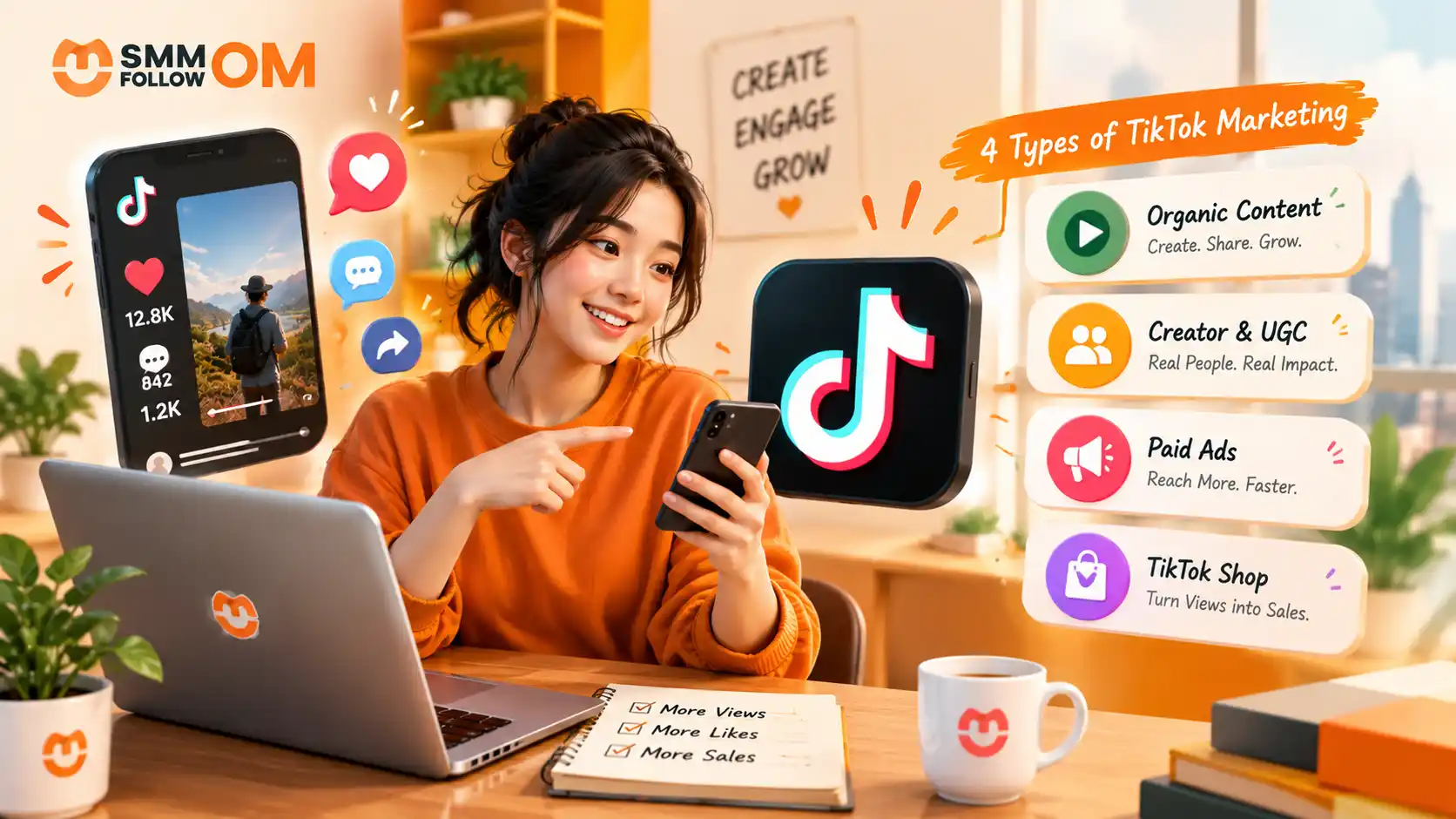
The 4 Main Types of TikTok Marketing
TikTok marketing has 4 types to help you decide where to spend your time and budget. They are connected, but each one solves a different marketing problem.
Organic TikTok Marketing
Organic marketing means publishing from your own account without paying TikTok to push the post. This lets a business test topics, angles, customer questions, demonstrations, and stories before deciding what's worth investing in. Because nothing is riding on a paid budget, you can publish a question-led video one week and a demonstration the next, then let the results decide. Posting when your audience is actually scrolling gives each test a fairer chance.
The content does not need expensive production.
A roofing company can explain why a certain type of leak occurs, a clothing store can compare two fits, and a restaurant can show how one menu item is prepared. The useful part is the information or experience inside the video, not whether it looks like a television commercial.
Organic content can also help you learn.
If three videos answering customer questions consistently hold attention while generic promotional videos are ignored, you have a clear signal about what your audience wants from the account. Eventually, it will grow your TikTok views.
Creator and UGC Marketing
Creator marketing means using another person's ability to communicate with the audience.
This can involve an influencer publishing to their own followers, an affiliate creator earning from resulting sales, or a UGC creator producing videos that the business later publishes or advertises.
The creator should fit the customer, not simply have the largest follower count.
A small skincare creator whose audience regularly asks about acne products may be more useful to a specialist skincare brand than a general lifestyle creator with a much larger but less relevant audience.
TikTok One is TikTok's current platform for brand and creator collaboration. Businesses can use it to find creators, manage projects, and connect creator content with advertising, while creators can find paid partnership opportunities.
TikTok Advertising
TikTok Ads Manager gives businesses paid access to audiences beyond the people reached organically. The useful ad format depends on whether the goal is awareness, website visits, leads, app activity, or sales.
In-Feed Ads appear within normal viewing.
Spark Ads allow businesses to promote eligible existing TikTok posts, including authorized creator posts. This means the paid campaign can build on existing content instead of creating an unrelated ad.
Search Ads serve a different need.
TikTok's Search Ads Campaign uses keywords to reach people searching for terms connected to a product or service, while Automatic Search Placement can extend eligible in-feed campaigns into TikTok search results.
You don't need to treat advertising as a replacement for organic content.
A more practical approach is to use organic publishing to learn which message works, then use paid distribution when reaching more of the right people delivers clear business value.
TikTok Shop and Social Commerce
TikTok Shop connects content and purchasing more closely. Where available, products can appear in in-feed videos, LIVE content, and the Showcase section on eligible accounts.
It lets customers move from discovery to shopping without following the usual social-media-to-website path.
This is particularly useful for products that benefit from demonstration. A customer can see how a kitchen tool works, watch a creator use a skincare product, or view a clothing item on a real person before deciding whether to buy.
TikTok Shop is not available in every country, so do not build your entire marketing plan around it before checking your market.
TikTok Shop runs in around 20 markets, including the United States, Brazil, Mexico, Japan and several Southeast Asian countries. In Europe it now covers ten: Austria, Belgium, France, Germany, Ireland, Italy, the Netherlands, Poland, Spain and the UK, after a four-market expansion in June 2026 that also introduced a Sell Across Europe tool for selling into other EU markets from one registration.
Why Do Businesses Use TikTok Marketing?
Businesses use TikTok marketing to reach new audiences, build brand awareness, show products or expertise, and turn attention into leads or sales.
One major advantage is discovery. A business can reach people who don’t already follow its account, which helps newer brands gain visibility beyond their existing audience.
TikTok also works well for product research and education. Viewers can understand what something does and whether it fits before they visit a website or contact the company, shortening the gap between first seeing a business and being ready to act.
For businesses focused on revenue, TikTok can also drive website traffic, generate leads, increase app installs, and boost product sales. The key is to choose a goal first, then use the TikTok marketing approach that best supports it.
Who Should Use TikTok Marketing?
TikTok is useful when the people you want to reach use the platform and your business has something that can be shown, taught, discussed, or demonstrated. The industry label matters less than that fit.
Ecommerce Brands
Physical products often translate easily into visual content. An ecommerce brand can show the product in use, compare options, answer buying questions, feature customers, or work with affiliate creators.
Beauty, fashion, food, home products, accessories, fitness products and consumer electronics are obvious examples, but the same approach can work in less visual categories when the problem or result can be demonstrated.
Local Businesses
TikTok can also work at a local level. Restaurants can show food and kitchen activity. Salons can show transformations. Gyms can demonstrate exercises. Real estate agents can explain local buying questions.
Repair businesses can show common problems they fix. The content does not need worldwide reach if the right people are nearby.
Service Businesses
Services are harder to photograph than products, but the knowledge behind them can become the content. An accountant can explain a tax mistake.
A lawyer can discuss general legal questions without giving individual legal advice. A designer can break down a bad website. A cleaning company can demonstrate a technique.
Expertise gives the business something useful to publish even when there is no physical product.
Creators and Personal Brands
TikTok naturally suits people whose knowledge, personality, opinion, or experience is part of what they sell.
Coaches, consultants, educators, authors, speakers and independent professionals can use content to make their expertise visible before asking someone to buy.
B2B Companies
TikTok is not automatically a bad platform for B2B marketing. A B2B company has a stronger case for using it when the people involved in the buying decision have questions that short content can answer clearly.
A cybersecurity company could explain common security errors. A SaaS company could demonstrate a workflow. A logistics company could answer shipping questions.
If the buying process depends on highly specialized decision-makers who rarely use TikTok for professional discovery, another channel may deserve more attention.
Is TikTok Only for Gen Z?
No, it’s true TikTok still has a strong younger audience, but its US user base extends well beyond Gen Z.
Pew Research Center reported in March 2026, from a survey fielded between February and June 2025, that 37% of US adults use TikTok. By age, that was 63% of adults under 30, 44% of those aged 30 to 49, 30% of those aged 50 to 64, and 12% of adults 65 and older.
That changes the decision for businesses.
A company should look at the age and interests of its own buyers instead of assuming everyone on TikTok is a teenager. For example, a brand selling to 35-year-old customers still has a meaningful potential audience on the platform.
How TikTok Search Fits Into Marketing?
TikTok Search helps businesses reach people who are already looking for something specific. Instead of waiting for a video to appear on the For You Page, users can search for products, reviews, tutorials, local businesses, or answers to a problem.
For example, someone may search for “best running shoes for flat feet” or “best coffee shop in Austin.” If your video clearly answers that search, it has a better chance of being useful to that person.
To improve your TikTok search visibility:
- Choose one clear topic: Build each video around one question or keyword.
- Say the topic in the video: TikTok can use spoken words to understand what the content is about.
- Add it to on-screen text: This makes the subject clear to both viewers and the platform.
- Write a useful caption: Explain the topic naturally instead of stuffing the caption with keywords.
- Use relevant hashtags: Add only hashtags that actually match the video.
- Check Creator Search Insights: This can help you find topics people are searching for and possible content gaps.
You can also use TikTok Search for paid marketing. Search Ads let businesses target specific keywords and show ads when people search for related terms.
The easiest way to start is to collect the questions customers already ask in comments, sales calls, reviews, support messages, or Google searches. Turn those questions into individual TikTok videos and track which topics bring useful views, website visits, leads, or sales.
What Content Works for TikTok Marketing?
There is no single TikTok format every business needs to copy. Start with what the viewer needs from the video.
Problem and Solution
Begin with a clear problem and show one useful answer. A mechanic might explain why a car makes a particular sound. A marketer could show why an ad is generating clicks but no sales. The problem gives the video immediate context.
Product Demonstration
Let the viewer see what the product actually does. Show how it works, where it fits, what comes with it, or what happens when someone uses it. This is stronger than making the viewer imagine the result from a list of features.
Behind the Scenes
Show a part of the business customers rarely see. That could be packing an order, preparing food, testing a product, setting up an event, or fixing a mistake before something reaches the customer. The value comes from access, not polished production.
Customer Story
A customer result gives the content a specific situation. Focus on what changed, what the customer needed, or how the product was used. Get permission before using customer information or content.
Comparison
Comparison videos help people who are already choosing between options. A business can compare sizes, models, materials, approaches, packages, or common alternatives. Keep the comparison useful instead of making every option except yours look deliberately bad.
Expert Explanation
Take one question you regularly hear and answer it clearly. This works particularly well for businesses where customers need information before they are comfortable buying.
Relevant Entertainment
Humor can work when it fits the audience and brand. You do not need to join every meme or trending format. A trend earns its place in your marketing only when you can connect it naturally to something your customers understand.
How to Build a TikTok Marketing Strategy?
Once you know your audience, content direction, and marketing goal, turn them into a plan your team can follow. A good TikTok strategy connects content production, publishing, promotion, and review instead of treating each video as a separate idea.
Step 1: Set a 30-Day Target
Set a fixed starting period instead of planning indefinitely. For example, decide what you want to achieve over the next 30 days and what result would make you continue, change, or stop the approach.
Write down:
- the main campaign goal
- the number of posts you can realistically produce
- any creator or ad budget
- the date you will review the results
This gives the campaign a clear beginning and review point.
Step 2: Turn Your Topics Into a Content Plan
Take the topics you already selected and assign them to actual posts. You might plan three customer-question videos, two demonstrations, and one comparison instead of deciding what to film on the day you publish.
For each planned post, note the topic, format, person responsible, and publishing date. This prevents the account from becoming dependent on last-minute ideas or whatever happens to be trending.
Step 3: Decide What Happens After Publishing
Not every post needs extra promotion. Let organic posts run first unless a campaign already requires paid reach or a creator partnership.
If one post performs better than your normal results, decide whether it deserves another version, a follow-up video, or paid promotion. This creates a clear path from testing an idea to expanding a proven one.
Step 4: Create a Simple Production Workflow
Decide who handles each part of the process before you start producing content.
For example:
Idea → script/notes → recording → editing → approval → publishing
A small business may have one person doing every stage, while a larger team may divide the work. Either way, writing down the process makes regular publishing much easier. This simple workflow will help you grow your account naturally.
Step 5: Review the Plan and Make One Change
At the end of the test period, compare the planned content with what actually happened. Identify what deserves to continue and where the process broke down.
Change only what needs improvement. If the topics worked but production was too slow, fix the workflow. If content was published consistently but produced little business value, change the campaign direction rather than simply posting more.
Then use what you learned to build the next 30-day plan.
TikTok Business Account vs Personal Account
A Personal Account is designed mainly for individual users and creators. A Business Account gives companies access to more commercial features and performance tools. The main differences are:
Personal Accounts suit creators and individuals, with basic insights, wider music access, limited ad options, and basic business tools.
Business Accounts suit brands, with business-focused analytics, the Commercial Music Library, TikTok advertising tools, and marketing and lead tools.
How Much Does TikTok Marketing Cost?
TikTok marketing costs depend on how you promote your business. Creating your own videos can cost very little, while paid ads and creator partnerships require a separate budget.
For paid campaigns, reported averages are around $4-10 CPM and $0.30-1.50 CPC, although your actual cost will depend on the audience, competition, campaign goal, and creative.
TikTok Advertising Costs
TikTok Ads Manager has minimum budget requirements. As of 2026, TikTok says campaign budgets must exceed $50, while an ad group's daily budget must exceed $20.
A lifetime budget works differently. TikTok calculates the ad group minimum as $20 multiplied by the total number of days in the campaign, so a 31-day campaign needs at least $620. That catches businesses that plan around the daily figure and then find the lifetime option requires far more.
The minimum is only what you need to run the campaign. A business may need a larger budget to collect enough data and find which audience or creative performs better.
Separately from ads, Smmfollowom’s TikTok services add visible views or followers to a post or account. That is a different thing from advertising. It moves a number on the profile, not demand, so keep it out of your campaign reporting or the ad data stops meaning anything.
TikTok Creator Costs
Creator pricing varies even more because creators set their own rates.
The follower count is only one part of the price. A creator may charge more for video production, exclusivity, longer usage rights, or permission to use the content in a Spark Ad.
What Changes the Cost?
Creative performance: A video that holds attention and produces results can make your ad spend more efficient.
Season: Advertising can get more expensive during competitive periods like Black Friday and the holiday season.
Audience: A narrow or highly competitive audience can cost more to reach than a broader one.
So, there is no standard TikTok marketing budget. Start with the method that matches your goal, then increase spending only when the results justify it.
How to Measure TikTok Marketing
To measure TikTok marketing properly, start with the goal of the campaign. A video made for awareness should not be judged the same way as an ad built to generate sales.
For awareness, track:
- views
- unique viewers
- follower growth
- hashtag performance
For engagement, look at:
- likes
- comments
- shares
- saves
- average watch time
- completion rate
- how many viewers stay through the first few seconds
For conversions, focus on:
- click-through rate (CTR)
- conversion rate
- cost per acquisition (CPA)
- return on ad spend (ROAS)
TikTok's own analytics tools can cover most of the basic tracking. TikTok Studio or Business Analytics show account and video performance, while TikTok Ads Manager provides more detailed campaign data, including impressions, clicks, delivery, and conversion results.
You should also be careful with last-click attribution. A customer may first discover your product on TikTok, leave the app, search for your brand later, and then buy through another channel. In that case, last-click reporting may give TikTok little or no credit even though it played an important role in the sale.
For larger campaigns, businesses can use:
- multi-touch attribution
- marketing mix modeling
- conversion lift studies
- split testing
These methods show whether TikTok actually drove additional sales or leads, rather than just appearing somewhere in the customer journey.
The main point is simple: do not judge TikTok marketing by views alone. Match the metric to the goal, then check whether the activity is producing a useful business result.
FAQs About TikTok Marketing
Can You Do TikTok Marketing Without Showing Your Face?
Yes. A business can create screen recordings, product demonstrations, hands-only videos, animation, process footage, slides, voiceovers, or text-led explanations without putting a spokesperson on camera.
Do You Need Expensive Equipment for TikTok Marketing?
No. A modern smartphone can be enough for many TikTok formats, especially demonstrations, behind-the-scenes content, interviews, reactions, and simple educational videos.
Can You Reuse TikTok Content on Instagram Reels or YouTube Shorts?
You can reuse the underlying idea or footage, but do not assume the same finished post is ideal everywhere. Each platform has different audience behaviour, interface elements, caption styles, and discovery systems.
The money works differently too. Facebook pays on qualified views rather than the public counter, which our breakdown of Reels payouts explains.
How Long Does TikTok Marketing Take to Work?
There is no guaranteed timeline because different marketing methods produce different types of results. An organic account needs enough publishing history to reveal useful patterns, while paid campaigns can begin generating data sooner but still require testing.
Can Employees Appear in a Company's TikTok Videos?
Yes, and employees can make a business feel more recognizable when they are comfortable participating. Staff can explain processes, demonstrate products, answer questions, or show parts of the operation that customers normally do not see.
Conclusion
Before building a large TikTok calendar, start with three real questions customers ask before they buy from you. Turn each question into one clear piece of content and give every video a different useful answer rather than repeating the same sales message.
Then compare what happens. Look at which topic holds attention, earns useful responses, brings search discovery, or produces the next customer action. That gives you evidence for the next three videos instead of leaving your TikTok strategy dependent on guessing what might go viral.
Share this on social media


Recently Posted Blogs
24OCT2026
How to Increase Likes on Facebook: 12 Practical Ways
This guide explains 12 practical ways to increase Facebook likes in 2026, including creating original content, analyzing audience preferences, testing Reels, improving captions, posting at suitable times, and collaborating with relevant partners. It also covers paid promotion, purchased likes, performance tracking, and engagement analysis to help businesses improve visibility and understand what resonates with their audiences.
Read More
22OCT2026
How to Start an SMM Reseller Business in Bangladesh?
To start an SMM reseller business in Bangladesh, you buy social media services from a supplier panel at reseller rates, resell them to local customers at your own price in BDT, and keep the difference.
Read More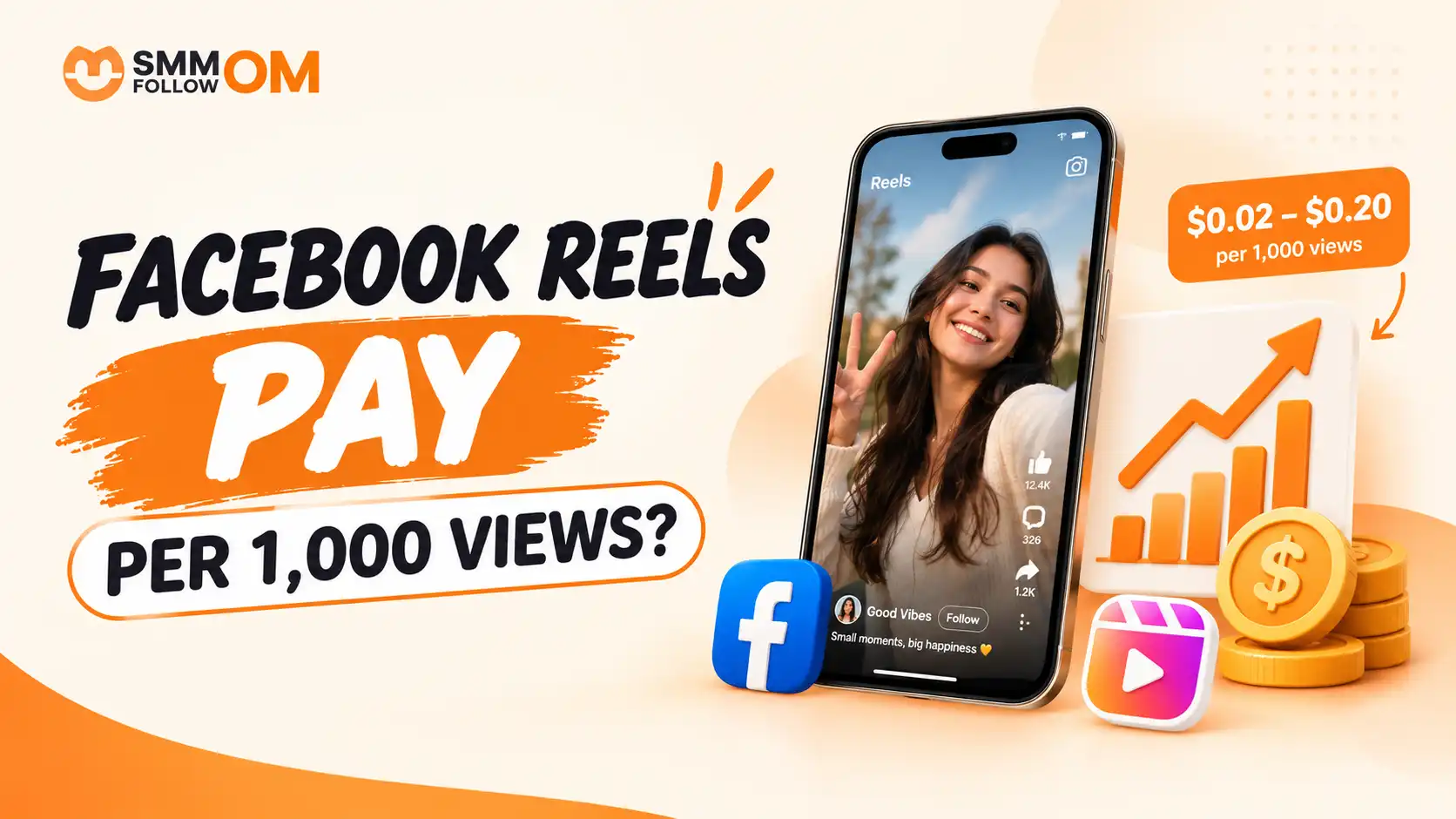
19OCT2026
How Much Does Facebook Reels Pay Per 1,000 Views?
You can earn $0.02 to $0.20 per 1,000 views, with many estimates closer to $0.05 to $0.10 per 1,000 Reel views. Numbers above $1 per 1,000 views almost always come from longer videos or a US finance-style audience, not from ordinary Reels. The variation depends on your niche and country. Also, higher numbers may mix Reels earnings with longer-video ad earnings, so they aren't always a good estimate for Reels alone.
Read More