19OCT2026
How Much Does Facebook Reels Pay Per 1,000 Views?
Table of Contents
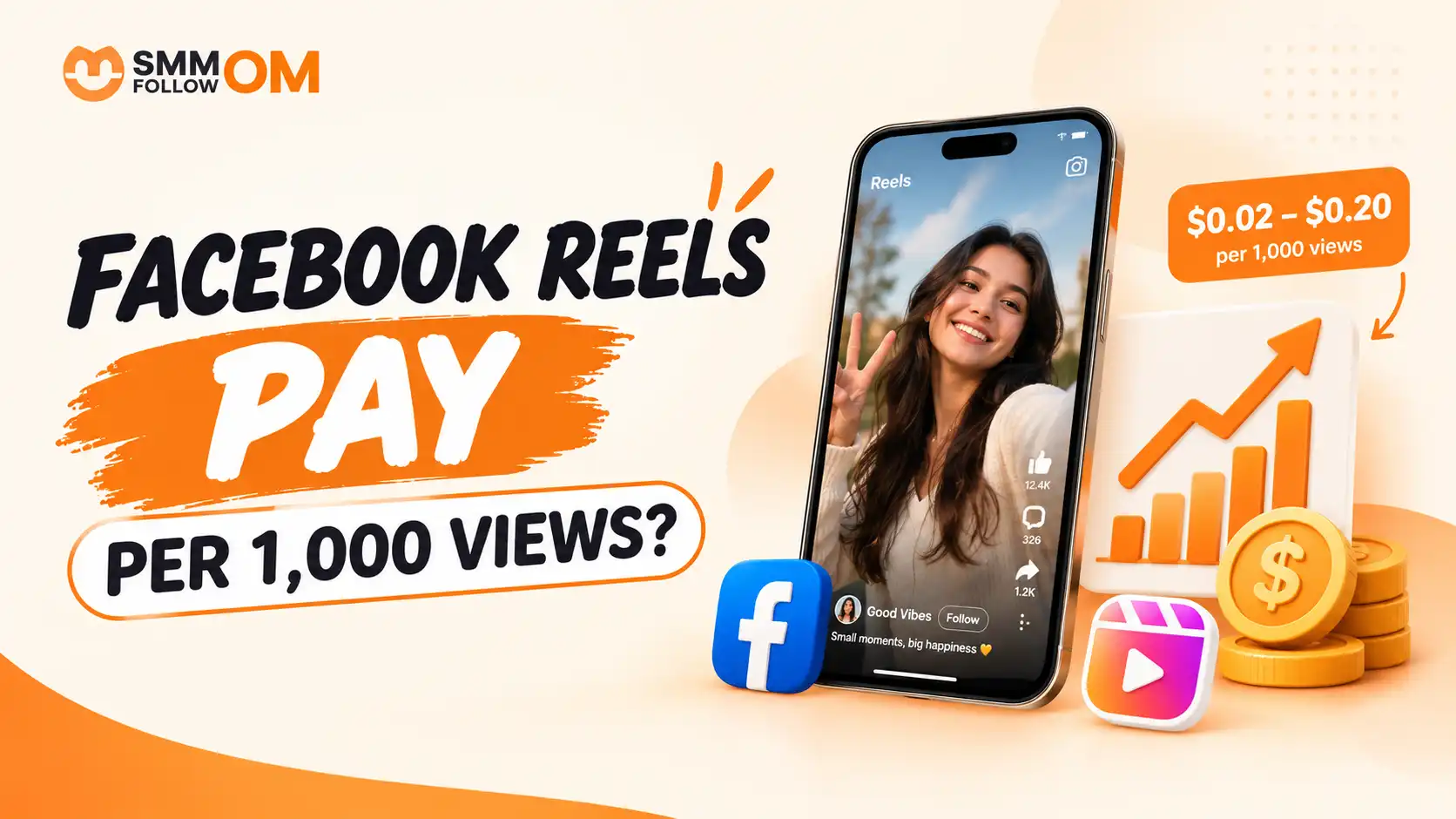
You can earn $0.02 to $0.20 per 1,000 views, with many estimates closer to $0.05 to $0.10 per 1,000 Reel views. Numbers above $1 per 1,000 views almost always come from longer videos or a US finance-style audience, not from ordinary Reels. The variation depends on your niche and country. Also, higher numbers may mix Reels earnings with longer-video ad earnings, so they aren't always a good estimate for Reels alone.
The pool is real. Meta says Facebook paid creators nearly $3 billion in 2025, up 35% from the year before. The question is how that money gets divided, and why two creators with the same view count can take home very different amounts.
Why Do Facebook Reels Pay Rates Look So Different?
The biggest reason Facebook earnings estimates look confusing is that people often compare three different numbers:
- advertiser CPM,
- long-form video RPM
- Reels earnings.
So one source may say $ 6 per 1,000 views, while another may say $0.05 per 1,000 views. Both can be talking about Facebook earnings, but they may be measuring different types of video monetization.
Here is how:
Advertiser CPM
CPM means cost per mille, or the cost of 1,000 ad impressions. This is what advertisers pay Meta to show ads, not what Facebook sends directly to creators.
Facebook CPM can vary a lot. Some 2026 benchmarks place average costs around $8 to $11, while another large dataset reports a median closer to $19.81.
Campaign type matters too. Cold awareness campaigns may cost around $2 CPM, while competitive Q4 retargeting can rise above $30.
Industry makes a difference as well. Finance and insurance advertisers may pay around $15 to $30 CPM, while media and entertainment can sit closer to $4 to $9.
Reels advertising is often cheaper than Feed advertising.
One 2026 benchmark puts Reels inventory around 20% to 35% cheaper for advertisers using vertical video. That matters because lower ad prices can mean less advertising revenue available around Reels content.
The important point is simple: a $10 or $20 Facebook CPM does not mean a creator earns $10 or $20 per 1,000 Reel views.
Long-Form Facebook Videos
Longer Facebook videos have historically earned more per view because they can support in-stream advertising.
Some 2026 sources put long-form in-stream advertising around $2 to $5 CPM, while creator-reported earnings can range much more widely. Older and current industry reports often reference Facebook's 55/45 revenue split, where creators receive about 55% of eligible ad revenue.
Certain audiences can push earnings much higher.
For example, reports from US finance creators show much stronger RPMs than entertainment content watched mainly in lower-ad-value markets.
But one important change matters.
In-Stream Ads stopped being a separate monetization program in August 2025. Meta moved In-Stream Ads, Ads on Reels, and Performance Bonus into the broader Facebook Content Monetization system.
So when you see the term “in-stream RPM” today, it usually refers to how longer videos perform inside Content Monetization, not to a separate Facebook program.
Facebook Reels Earnings
For Reels specifically, the rate sits far below advertiser CPM because Facebook does not pay for every view shown on the counter. The current Content Monetization system weighs several signals, including watch time, completion, engagement, ad activity, audience location, and whether the view qualifies for monetization at all.
Meta now gives creators a metric called Earnings Rate. It shows approximate earnings per 1,000 Qualified Views, and it reports Non-Qualified Views separately, so you can see how much of your traffic earned nothing.
The share of total views that become eligible ranges from 50% to 70% in some cases, though that figure varies widely by content type and audience.
Facebook Reels Pay Per 1,000 Views by Category
The next three lists break the same question down three ways: by creator level, by audience country, and by content niche.
Facebook Reels Earnings by Creator Level and Real-World Results
Facebook Reels RPM can change sharply based on audience, watch time, engagement, niche, qualified views, and ad demand.
Facebook Ad CPM by Country in 2026
These are advertiser CPM figures (what brands pay Facebook per 1,000 ad impressions). Creator RPM is a fraction of these, roughly a 55% revenue share minus non-monetized views, but the gap between countries stays the same.
Creator earnings are only a fraction of these advertising rates, so a $20 CPM in the United States does not mean a creator earns $20 per 1,000 views. The table mainly shows why the same number of views can earn different amounts depending on where the audience comes from.
Facebook Reels RPM by Niche in 2026
Your content niche can change Reels earnings because advertisers pay more to reach some audiences than others. These are reported 2026 RPM ranges, not fixed Meta rates.
A high-paying niche can make a big difference, especially when combined with a US-heavy audience. Some 2026 reports suggest high-value niches can earn 10 to 50 times more per view than broad entertainment content.
For example, a finance creator with 500,000 views may earn more than an entertainment creator with 5 million views. Still, these are reported examples, not guaranteed payouts.
How to Calculate Your Actual Facebook Reels Earnings?
The simplest way to estimate your Facebook Reels earnings is to use your Qualified Views and Earnings Rate from the monetization dashboard.
Use this formula:
Qualified Views ÷ 1,000 × Earnings Rate = Estimated Earnings
For example, imagine your Reel gets 100,000 total views, but only 70,000 count as Qualified Views. If your Earnings Rate is 0.10 US dollars per 1,000 qualified views, the calculation is:
70,000 ÷ 1,000 = 70
70 × 0.10 USD = 7 USD
So, in this case, 100,000 total views would earn about 7 USD.
Another example: if a Reel gets 500,000 total views, with 350,000 Qualified Views, and your Earnings Rate is 0.15 US dollars, then:
350,000 ÷ 1,000 = 350
350 × 0.15 USD = 52.50 USD
You can also calculate your effective earnings per 1,000 total views. If you made 60 US dollars from 1 million total views, then:
60 ÷ 1,000,000 × 1,000 = 0.06 USD
That means your effective RPM across all views was 6 cents per 1,000 views.
The key point is that total views and Qualified Views are not the same thing. Your Earnings Rate is based on qualified views, so two Reels with the same public view count can still earn very different amounts.
6 Ways to Increase Your Facebook Reels Earnings
Here are 6 ways to increase your reel earning-
1. Audience Value
Try to attract viewers from countries with stronger ad demand, such as the US, Canada, UK, and Australia. Use topics, language, posting times, and examples that naturally fit those audiences.
2. Niche Choice
Create content around a clear topic instead of chasing every trend. Finance, health, technology, real estate, and education generally report higher Reels RPM than entertainment, memes, or viral content. Reported finance RPM can reach 0.30 to 2.00+ US dollars per 1,000 views, compared with about 0.02 to 0.10 US dollars for general entertainment.
3. Qualified Views
Check Non-Qualified Views in your monetization dashboard and find out why some plays are not earning. Original content, policy-safe posts, and proper content rights can help more views qualify. Increasing the share of Qualified Views means more of the same traffic can generate revenue, though Meta doesn't provide a fixed percentage increase.
4. Watch Time
Get to the point quickly and give viewers a reason to keep watching. Strong openings, shorter pauses, clear storytelling, and cutting unnecessary parts can improve retention and completion. Meta says longer watch time is receiving more weight in Content Monetization.
5. Safe Audio
Use original audio, voiceovers, or music cleared for monetization instead of choosing a trending song without checking its rights. Music restrictions can make otherwise successful views ineligible for earnings. Some 2026 creator reports claim switching to original or Meta-approved audio can double or even triple effective RPM, though this is not a guaranteed Meta rate.
6. Posting Consistency
Publish often enough to test different hooks, topics, lengths, and formats, then compare their Qualified Views and Earnings Rate. Repeat the patterns that consistently perform better instead of simply posting more. No fixed percentage shows how much consistent posting raises earnings. But a larger library of successful monetized Reels gives you more chances to earn.
Does Buying Views Increase Reels Earnings?
No. Facebook pays for qualified views, and traffic that arrives outside the normal recommendation system generally doesn't qualify. It can also create engagement patterns that put monetization eligibility at risk, since Meta’s monetization policies expect authentic engagement.
Services like this do have one use: plain visibility. Smmfollowom’s Facebook services can add early attention to a new Reel or Page, though that attention does not count toward Qualified Views and will not raise your Earnings Rate.
Frequently Asked Questions
Can Old Facebook Reels Keep Earning Money?
Yes, an older Reel can still generate earnings if it continues getting qualified views and remains eligible for monetization. A Reel does not have to be newly published to keep producing revenue.
When Does Facebook Pay Reels Earnings?
Facebook pays creators after their balance reaches the required payout threshold and their payment account is fully set up. If the balance is below the threshold, the money normally carries over to a later payout period.
Do You Have to Pay Tax on Facebook Reels Earnings?
Creator earnings may be taxable depending on where you live. Meta may also ask for tax information before sending payouts, so creators should check the tax rules that apply in their own country.
Can You Monetize Reels From More Than One Facebook Page?
It is possible to manage and monetize more than one eligible Page or profile, but each account and its content still need to meet Meta's monetization rules. Earnings and performance can also vary between Pages even when the same creator manages them.
Can Sponsored Reels Also Earn From Facebook Monetization?
Sponsored content and Facebook's own creator payouts are different income sources. A Reel may generate brand-deal income separately from what Facebook pays, but creators still need to follow Meta's branded-content and monetization rules.
Does Deleting and Reposting a Reel Increase Earnings?
Not necessarily. Reposting the same content does not guarantee better reach or a higher Earnings Rate, and repeated or low-value reused content can create originality problems. It is usually better to understand why the first Reel underperformed and improve the next version.
Conclusion
Facebook Reels does not have one fixed payment for every 1,000 views. Reported earnings can range from only a few cents to much higher amounts, depending on the creator, audience, niche, and content performance.
The most useful numbers are the ones inside your own monetization dashboard. Track Qualified Views, Earnings Rate, and Non-Qualified Views, then compare which Reels produce the best return. Getting more views helps, but getting more of the right views that actually qualify for earnings matters much more.
Share this on social media


Recently Posted Blogs

17OCT2026
How to Increase Facebook Followers in 2026: 12 Practical Ways That Actually Help
Increasing Facebook followers is no longer just about posting often. Facebook recommends content based on signals such as what people watch, like, comment on, and show interest in. That means growth depends more on who sees your content, why they visit your Page, and whether they want to follow it.
Read More
15OCT2026
How to Improve Your Facebook Business Page: 13 Practical Steps
Facebook is still the largest social platform in the world, with over 3 billion monthly users at Meta’s last published count. That reach is why the Page itself needs to work, not just the posts you put on it.
Read More
13OCT2026
How to Monetize a Facebook Page: Requirements, Methods & Earnings
To monetize a Facebook Page, use a Page or a profile in Professional Mode, stay within Meta’s monetization policies, and turn on whichever tools your Monetization dashboard unlocks: Content Monetization (invite-based), Stars (500 followers for 30 days), Subscriptions, or paid brand partnerships.
Read More