01OCT2026
How to Market an SMM Panel After Launch: A Step-by-Step Growth Guide
Table of Contents
Launching an SMM panel is only the first step. To get customers, you need to make the right people aware of the panel, give them a reason to trust it, turn visitors into registered users, and then turn those users into repeat buyers.
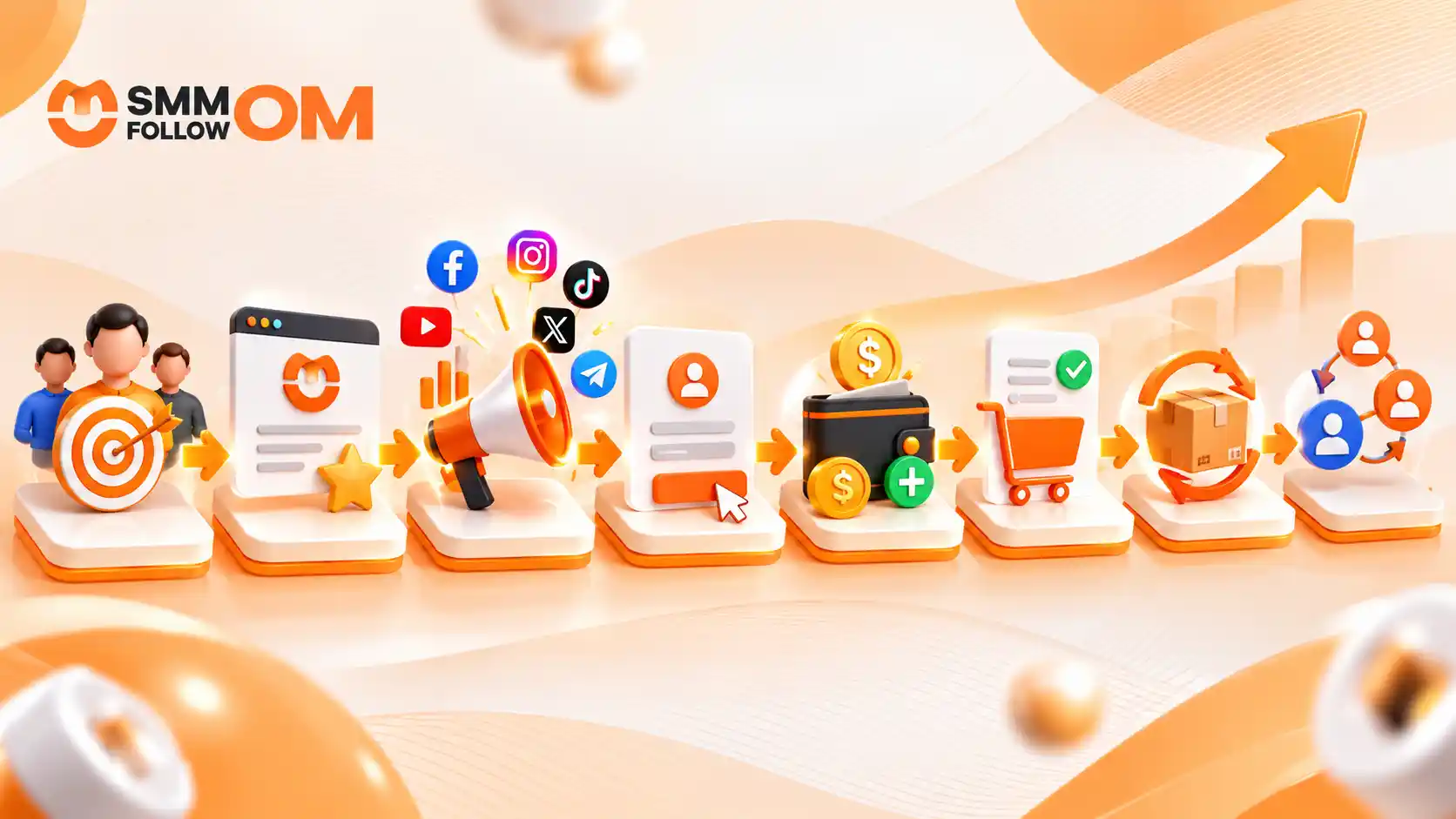
The basic process looks like this:
Target audience → Positioning → Traffic → Signup → Deposit → First order → Repeat order → Referral
You do not need to use every marketing channel from day one. Start with a clear offer, ensure the website converts visitors, then build traffic through SEO, content, social media, outreach, partnerships, and referrals—track which channels actually bring paying customers and put more effort into the ones that work.
Step 1: Position Yourself Differently
Do not start by promoting the panel to “everyone who uses social media.” That audience is too broad. Different SMM panel customers want different things.
Your possible customer segments may include:
- Individual creators
- Social media managers
- Freelancers
- Digital marketing agencies
- Small businesses
- E-commerce businesses
- Influencers
- Resellers
- High-volume buyers
- Local businesses
Choose one or two primary groups first. For example, if you want to attract freelancers and agencies, your marketing may focus on:
- multiple social platforms,
- bulk ordering,
- reseller pricing,
- API availability,
- order history,
- support,
- and managing recurring client orders.
If your target audience is individual creators, they may care more about:
- simple ordering,
- low minimum quantities,
- easy payments,
- platform-specific services,
- and clear service descriptions.
This is your ideal customer profile, or ICP. Your marketing becomes easier once you know who you are speaking to.
Instead of saying:
We provide the best SMM services for everyone.
You can communicate something much more specific:
Manage Instagram, TikTok, YouTube, and Facebook services from one dashboard with clear pricing and order tracking.
Specific positioning gives customers a reason to understand where your panel fits in the market.
Look at how an established SMM panel homepage handles this: platforms, starting prices and the next step are visible before you scroll.
Step 2: Make Sure the Website Is Ready to Convert Traffic
Don't spend money or time driving visitors to a website that is hard to understand. Before serious promotion starts, check the customer journey. A new visitor should be able to move through something close to:
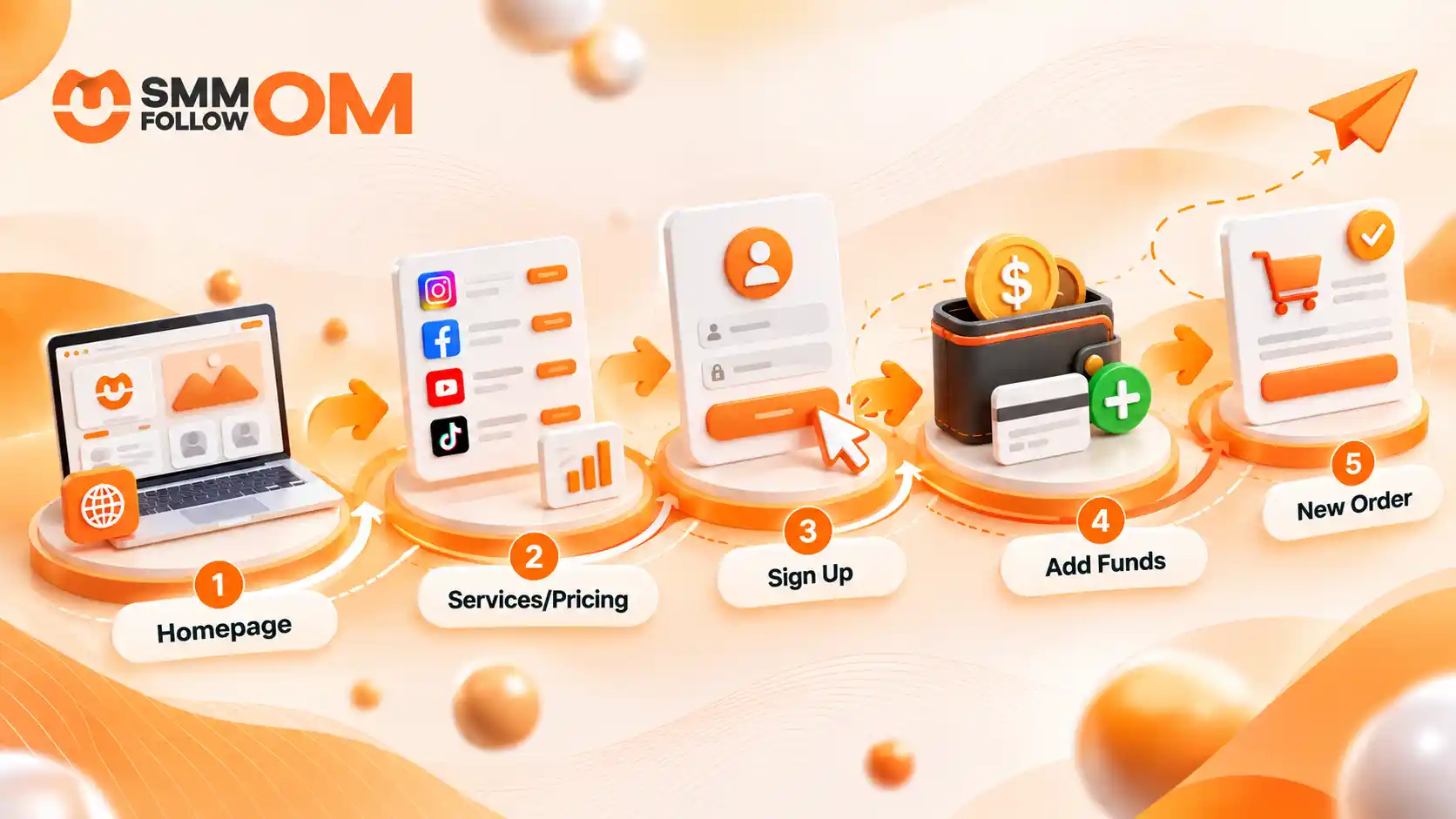
The website should make these questions easy to answer:
- What does this business sell?
- Which platforms are supported?
- How much do services start from?
- How do I create an account?
- How can I add funds?
- How do I get support?
- What happens if I have an order problem?
Trust also affects conversion.
Basic business information, working support channels, public policies, useful service descriptions, and genuine customer feedback can all reduce hesitation. None of that holds up for long if orders stall, which is why vetting suppliers before you list their services matters as much as anything on your website.
You already need dedicated pages such as About, FAQ, Terms, Privacy, Refund, and support. Do not turn your marketing article into another website-page checklist. The marketing point is simple:
Every visitor you acquire costs time or money, so the website needs to give that visitor a clear next step.
So, make sure you have all the Important Pages Every SMM Panel Website Should Have.
Step 3: Set Up Tracking Before You Start Promoting
You cannot improve SMM panel marketing by tracking only website traffic. Traffic is useful, but it doesn't pay the bills.
Set up analytics to understand the full conversion funnel. Track events such as:
- Website visit
- Pricing page visit
- Sign up
- First deposit
- First order
- Repeat order
- Referral signup
Tools such as Google Analytics and Google Search Console can help with website and search performance. Your own panel dashboard should provide the transaction data needed to connect traffic with actual customer behavior.
Use UTM parameters when you promote links through:
- Telegram
- partner websites
- guest posts
- paid campaigns
- influencer placements
For example:
?utm_source=telegram&utm_medium=community&utm_campaign=launch
This lets you see whether a Telegram campaign generated registrations, not just clicks. The most useful marketing metrics include:
This prevents you from making decisions based only on page views or social-media engagement.
Step 4: Build an SEO Strategy Around Real Search Intent
SEO helps your SMM panel appear in Google when people search for SMM services, guides, or solutions.
The main benefit is consistent organic traffic without paying for every click. It also helps you attract people at different stages of the buying journey, from someone researching SMM panels to someone ready to purchase a service.
A good SEO strategy should focus on the right keywords, useful content, strong landing pages, and internal linking between related topics. Over time, this can increase search visibility, bring more qualified visitors, and reduce your dependence on paid advertising.
Step 5: Publish Content That Solves Buyer Problems
Content marketing works better when the article answers a question someone is already asking. Do not make every article a sales pitch. Useful content may include:
- Beginner guides
- Comparisons
- Troubleshooting articles
- Payment guides
- Platform-specific guides
- Reseller education
- How-to content
- Service explanations
- FAQs
- Case studies
- Industry updates
A person searching:
Why is my SMM order Partial?
does not want a homepage advertisement.
They want an explanation. Answer the question first. Then, where relevant, point the reader toward your services or support resources. Our own write-up on why SMM orders drop, fail or finish Partial follows this pattern: the answer comes first, and service links appear only after the reader has what they came for. A good content funnel may look like:
Search question → Helpful article → Relevant service page → Signup
You can also repurpose one strong article into:
- Facebook posts
- LinkedIn posts
- short videos
- Telegram posts
- email content
- FAQs
- social carousels
That gives one piece of content more value without writing the same article repeatedly.
Step 6: Build Social Profiles That Support the Brand
An SMM panel sells social-media-related services, so inactive or poorly managed social profiles create a strange impression. You do not need to post on every platform. Choose the channels where your audience actually spends time.
These may include:
- TikTok
- YouTube
- X
- Threads
- Telegram
One practical warning before you put time into any of these. Platforms that sell ad space often restrict pages and links connected to engagement services, and panel owners regularly report Facebook pages being limited or their website link being blocked. Build your profiles around education and brand content rather than service listings, keep your website link in the bio instead of every post, and make Telegram the channel you control. If one page gets restricted, you lose that audience overnight, so never let a single social profile be your only way to reach customers.
Your content does not need to be constant promotion. Use a mix of:
Educational content
Explain ordering, service terms, common mistakes, or platform concepts.
Product content
Introduce new services, payment options, panel features, or updates.
Proof content
Use genuine reviews, milestones, case examples, or support improvements.
Promotional content
Share discounts, referral offers, reseller offers, or limited campaigns.
Community content
Ask questions, answer comments, and discuss problems your customers actually face.
Short-form video can also work well for tutorials. For example:
How to place your first order in 30 seconds.
That can become a Reel, TikTok video, or YouTube Short. Either way, build awareness among customers.
Step 7: Use Direct Outreach to Get Your First Customers
SEO takes time. Direct outreach can help you start conversations much earlier. Build a focused prospect list instead of sending the same message to thousands of people. Potential prospects include:
- Freelancers
- Social media managers
- Small agencies
- Influencers
- Local marketing businesses
- E-commerce sellers
- Existing social-media service resellers
Research the person before sending anything. The message explains why you contacted that specific person.
Step 8: Create a Referral Program for Existing Customers
A satisfied customer already understands your service. That makes referrals especially valuable. You could offer:
- account credit,
- discount codes,
- referral commissions,
- reseller discounts,
- loyalty rewards,
- or affiliate commissions.
For example:
Refer a customer and receive account credit after their first qualifying purchase.
The exact incentive depends on your margins. Do not offer a referral reward so large that the acquisition cost becomes unprofitable. Track:
Referral customers acquired → average order value → repeat purchase rate → total customer value
A smaller reward that brings repeat buyers can be more valuable than a large bonus that attracts one-time users.
Step 9: Use Introductory Offers Carefully
Offers can help someone move from consideration to first purchase. Possible promotions include:
- First-order discount
- Welcome credit
- Deposit bonus
- Volume discount
- Reseller discount
- Bundle
- Limited-time coupon
But discounts should have a purpose. Do not train your customers to wait for a coupon before every order.
For example, a first-purchase offer can help a new user try the panel. A volume discount can encourage a reseller to consolidate more orders with you.
Each marketing objective is different. Before running a promotion, decide:
Who is the offer for?
What action do you want them to take?
Can your normal margin support the incentive?
Before you decide how big a discount can be, check what your margin can actually absorb. Our SMM reseller business guide walks through markup versus margin with worked numbers.
Step 10: Participate in Communities Without Spamming Them
Communities can help you find customers, understand buyer problems, and build brand recognition. Relevant communities may exist on:
- Facebook Groups
- Telegram
- Discord
- industry forums
- freelancer communities
- creator communities
- marketing groups
Do not join and immediately post: Cheapest SMM panel! Buy now!
That usually adds no value. Instead, participate in discussions. If someone asks why an order drops, answer the question. If a freelancer asks how to handle client orders, offer practical advice.
If a creator asks about delivery terms, explain them clearly.
People are more likely to remember a business that consistently helps than one that only posts promotional links. Community marketing should build familiarity first.
Step 11: Use Paid Advertising Only After You Know Your Funnel Works
Paid advertising can bring traffic quickly, but it can also burn money quickly. Do not start with a large advertising budget just because the panel has launched. First confirm that organic or direct traffic already converts into deposits and orders. If that funnel is weak, paid traffic only sends more people into it.
If that funnel is weak, paid traffic only sends more people into it. Potential paid channels may include:
- Google Ads
- Meta Ads
- Instagram Ads
- TikTok Ads
- remarketing campaigns
However, advertising rules and business eligibility vary by platform and can change. Check the platform's current policy before building a campaign around SMM-related offers.
Start with a controlled budget. Track:
- CPC
- Cost per signup
- Cost per first deposit
- Cost per customer
- ROAS
- Repeat purchase behavior
Suppose you spend $100 and acquire 20 customers. Your CAC is:
$100 ÷ 20 = $5
That figure only becomes useful when you compare it with what those customers are actually worth. If the average customer produces less than $5 in net value, the campaign is not sustainable.
Step 12: Use Email and Messaging to Bring Customers Back
Marketing should not stop after the first order. Returning customers are often more valuable than continuously chasing new visitors. Depending on the permissions customers have given you, lifecycle communication may include:
- Welcome emails
- Account onboarding
- Service updates
- New platform announcements
- Deposit confirmation
- Promotional campaigns
- Educational emails
- Newsletter content
- Loyalty offers
Segment customers instead of sending everyone the same message. For example:
New customer
Needs onboarding.
Active reseller
May care about wholesale rates, API-related features, or new service availability.
Inactive customer
May need a reactivation message.
High-volume buyer
May respond to volume pricing or account-specific support.
This is where customer segmentation becomes useful.
The same marketing message should not go to every user.
Step 13: Measure Which Marketing Channels Actually Make Money
After you have several channels running, stop treating them equally. You might discover:
- SEO produces fewer leads but better repeat buyers.
- Facebook Groups generate many signups but few deposits.
- Agency referrals have a low customer acquisition cost.
- Paid ads generate fast customers but weak retention.
- Telegram produces high-volume reseller accounts.
Compare channels based on business results, not vanity metrics. A simple report could look like this:
The numbers above are only an example, but the method is what matters. Judge each channel on customer quality, revenue, retention, and cost rather than on signup volume alone.
Step 14: Scale the Channels That Work Instead of Adding More Random Channels
Scaling marketing does not mean being active everywhere. If SEO is producing qualified customers, publish more useful content and strengthen the pages already ranking.
If cold outreach works, improve the prospect list, scripts, follow-up, and sales process. If partnerships produce strong customers, build more partner relationships. If referrals perform well, make the referral program easier to use.
You should also remove or reduce channels that consume time without producing useful customers.
A small business running three profitable acquisition channels is in a better position than one struggling to maintain ten channels that produce almost nothing.
Final Thoughts
Marketing an SMM panel after launch is not about using every channel at once. Focus on the channels that bring people who actually sign up, deposit, order, and come back.
One useful rule as a business owner: don't scale a marketing channel until you know those customers are profitable after support costs, discounts, and repeat-order behavior are considered.
More traffic is only valuable when it leads to better customers, not just more visitors.
Frequently Asked Questions
Is SEO enough to market an SMM panel?
SEO can become an important acquisition channel, but relying on a single traffic source creates unnecessary risk. Combine organic search with content distribution, referrals, social media, partnerships, or outreach where appropriate.
How long should I test a marketing channel before deciding whether it works?
Judge the channel based on enough data to see whether it creates signups, paying customers, and repeat orders. The required time depends on the channel. SEO typically needs a different evaluation period from direct outreach or paid traffic.
Can I Run Google or Meta Ads for an SMM Panel?
It depends on the platform's current policy and how you describe your business.
Should I Market the Panel Under My Own Name or Keep It Anonymous?
A name and a face convert better than an anonymous brand, because buyers deposit money with people they can identify. The trade-off is real, though. An SMM panel attaches to your public profile, and that follows you into other work. Decide this before you build an audience around either choice, since switching later means rebuilding trust.
How Do I Market a Panel That Has No Customers or Reviews Yet?
Start where proof is not the entry requirement. Communities and direct outreach let you help someone before you sell to them, and content ranks on usefulness rather than social proof. Save reviews and case studies for once you have real ones, since invented testimonials are recognisable and cost more trust than they buy.
Share this on social media


Recently Posted Blogs
19OCT2026
How Much Does Facebook Reels Pay Per 1,000 Views?
You can earn $0.02 to $0.20 per 1,000 views, with many estimates closer to $0.05 to $0.10 per 1,000 Reel views. Numbers above $1 per 1,000 views almost always come from longer videos or a US finance-style audience, not from ordinary Reels. The variation depends on your niche and country. Also, higher numbers may mix Reels earnings with longer-video ad earnings, so they aren't always a good estimate for Reels alone.
Read More
17OCT2026
How to Increase Facebook Followers in 2026: 12 Practical Ways That Actually Help
Increasing Facebook followers is no longer just about posting often. Facebook recommends content based on signals such as what people watch, like, comment on, and show interest in. That means growth depends more on who sees your content, why they visit your Page, and whether they want to follow it.
Read More
15OCT2026
How to Improve Your Facebook Business Page: 13 Practical Steps
Facebook is still the largest social platform in the world, with over 3 billion monthly users at Meta’s last published count. That reach is why the Page itself needs to work, not just the posts you put on it.
Read More