
12SEP2026
Do SMM Panels Guarantee Results? Myth or Real
Table of Contents
Do SMM panel services guarantee results? Not completely. An SMM panel may provide specific service-level commitments such as an ordered quantity, delivery process, refill period, or a procedure for Partial and cancelled orders.
However, it cannot guarantee permanent retention, organic reach, viral growth, sales, revenue, or how a social platform will treat delivered activity.
The problem is that the word “results” can mean very different things.
If you order 1,000 units and the service delivers 1,000, that is one measurable result.
But if you expect those 1,000 units to create more sales, stronger organic reach, or long-term audience growth, the outcome now depends on factors outside the panel.
So before trusting any guarantee, ask:
What exactly is guaranteed, for how long, under which conditions, and what happens if the service does not meet those conditions?
What Does “Guaranteed” Mean in an SMM Panel?
A guarantee in an SMM panel should describe a specific and measurable service condition rather than a general promise of social media growth. It may refer to delivery quantity, refill eligibility, order handling, or another defined part of the service.
For example, imagine a service description says:
1,000 followers – 30-day guarantee
That phrase is incomplete unless you know what the 30 days actually cover.
Does it mean:
- Will all 1,000 remain for 30 days?
- Can eligible drops be refilled for 30 days?
- Must the refill be requested manually?
- Does the period start when the order begins or when it completes?
- Can the service be refunded if a refill is unavailable?
These details matter more than the word guaranteed itself. A useful guarantee has:
- a measurable quantity,
- a defined time period,
- clear eligibility conditions,
- stated exclusions,
- and a remedy when the condition is not met.
Without those details, “guaranteed” is mainly a marketing phrase.
What Results Can an SMM Panel Realistically Guarantee?
An SMM panel can most realistically stand behind processes it can record and measure inside its own order system. These may include order submission, quantity tracking, status updates, refill eligibility, Partial handling, cancellation, or account-balance adjustments.
For example, a panel can record:
Order ID: 58492
Quantity: 5,000
Start Count: 12,400
Status: Partial
Remains: 1,200
Those are measurable system values. Depending on the service rules, the panel may also have a defined procedure for what happens next. Possible commitments include:
- sending a valid order to the provider,
- reporting its current status,
- reviewing eligible refill requests,
- marking an incomplete order Partial,
- cancelling an eligible order,
- or returning an undelivered amount to the panel balance.
These are operational commitments.
They are very different from promising that an account will become popular or profitable.
If you want to understand where these order IDs, service IDs, statuses, start counts, and balance adjustments come from, read our guide on how an SMM panel works.
Delivery Guarantee vs Retention Guarantee: What Is the Difference?
A delivery guarantee concerns whether the ordered quantity is supplied, while a retention guarantee concerns what happens to that quantity after delivery. The two should never be treated as the same promise.

Suppose you order:
2,000 followers
and 2,000 are delivered.
The delivery condition has been met.
Now suppose 150 disappear later.
That is a retention issue.
So an order can complete successfully and still lose part of its delivery a week later. Both things are true at once, and neither cancels the other.
This is where most buyers go wrong. They see Completed and read it as permanent. It is not. Completed means the provider finished sending. What the platform does with that activity afterwards is a separate question the panel never had control over.
Drops can happen for several reasons beyond the initial delivery itself. Our guide to why SMM panel orders drop or fail explains how service quality, platform filtering, wrong links, private accounts, and other order issues affect delivery.
Does a Refill Mean the Result Is Guaranteed?
No. A refill means eligible losses may be replaced during a defined period; it does not guarantee that a metric will remain permanently unchanged.

For example:
Ordered quantity: 1,000
Completed count: 1,000
Count after 12 days: 880
Refill period: 30 days
If the service conditions are still satisfied, the missing 120 may qualify for a refill. However, refill eligibility can depend on factors such as:
- whether the target remained public,
- whether the username or link changed,
- whether another order was placed on the same target,
- whether the original service is still available,
- whether the refill window is still open,
- and how the provider measures the starting and current counts.
That is why:
30-day refill ≠ 30-day permanent retention
A refill is a remedy with conditions.
It is not a lifetime warranty.
Can an SMM Panel Guarantee No Drops?
No provider can realistically guarantee that a social media metric will never decrease forever. “Non-drop” should therefore be read as a service description that needs further definition, not as an unlimited promise of permanent retention.

There are several reasons counts can change.
Users can unfollow.
Accounts can disappear.
A platform can recalculate metrics.
Activity may be removed.
The provider itself may change its supply source.
This means a label such as:
Non-Drop
should answer questions such as:
- Is refill included?
- How long is the refill period?
- Is refill automatic or manual?
- What losses are eligible?
- Are there conditions that cancel refill eligibility?
If none of that is explained, the term tells you very little.
Can SMM Panels Guarantee Start Time or Delivery Speed?
A panel can provide an estimated start time or delivery rate, but these should usually be treated as service estimates rather than guarantees unless the service terms explicitly define a remedy for delay.
A description might state:
Start: 0–30 minutes
or:
Speed: up to 10K/day
Those numbers describe expected service behaviour.
They do not always mean:
“Your exact order will start at minute 10 and finish at precisely this time.”
Actual timing can depend on:
- current provider load,
- target accessibility,
- queue size,
- service availability,
- quantity,
- and platform conditions.
This becomes especially important when the order is tied to a deadline.
If you need delivery before a campaign launch, event, or scheduled post, do not treat a broad speed estimate as a fixed completion time.
If you want to spread a larger order across planned intervals instead of relying on one continuous delivery speed, read our guide to drip-feed delivery in an SMM panel.
What Does Partial Mean for a Guaranteed Order?
A Partial status usually means the provider completed only part of the requested quantity and stopped the remaining delivery. Whether this results in panel credit, another adjustment, or manual review depends on the panel's stated policy.
Example:
Ordered: 10,000
Delivered: 7,500
Remains: 2,500
The order may be marked:
Partial
The important question is then:
What happens to the undelivered 2,500?
Some systems automatically calculate the unused portion and return its value to panel balance.
Others may require provider processing before the adjustment appears.
That is a service-handling question, not a promise that every original order must always complete 100%.
Can SMM Panels Guarantee Organic Reach or Virality?
No. An SMM panel cannot guarantee that a social platform will organically recommend content, make a post viral, or continue expanding its reach after an order finishes. Organic distribution depends on many factors the panel does not control, including:
- content quality,
- watch behaviour,
- audience response,
- topic relevance,
- competition,
- recommendation systems,
- account history,
- and platform policy.
This is also why a delivered metric and a marketing result are different things. A Reel can receive its ordered views and still fail to attract meaningful organic interest.
Likewise, another piece of content can perform well organically without any panel service.
YouTube, for example, explicitly states that artificial increases in views, likes, comments, subscribers, and other metrics through prohibited methods violate its Fake Engagement Policy. It also notes that it may not count activity identified as artificial.
So successful order delivery does not automatically mean the platform will treat all resulting activity as legitimate organic engagement.
Can an SMM Panel Guarantee Sales or Revenue?
No SMM panel can guarantee sales, leads, revenue, or profit because those outcomes depend on the entire customer journey, not a single social media metric.
Imagine a business receives more profile activity. Sales still depend on:
- product quality,
- price,
- audience fit,
- brand trust,
- website experience,
- offer quality,
- shipping,
- reviews,
- customer support,
- and checkout conversion.
An SMM panel does not control those factors.
For example:
5,000 delivered views
does not automatically equal:
100 customers
No fixed conversion formula connects those numbers.
This is why claims such as:
- Guaranteed sales
- Guaranteed customers
- Guaranteed profit
- Guaranteed viral growth
should be treated very differently from a clearly defined service-level guarantee.
What Results Are Outside an SMM Panel’s Control?
Any outcome that depends primarily on platform decisions, audience behaviour, or business performance sits outside the panel's direct control.
A useful way to separate them is:
| Panel Can Measure | Panel Cannot Fully Control |
|---|---|
| Ordered quantity | Permanent retention |
| Service ID | Organic reach |
| Order status | Algorithm recommendations |
| Start Count | Audience interest |
| Remains | Virality |
| Refill request | Sales |
| Partial amount | Revenue |
| Provider charge | Customer loyalty |
This is the simplest way to understand the limits of a guarantee.
The left side contains operational data.
The right side contains outcomes influenced by outside systems and real people.
Which “Guaranteed Result” Claims Should Make You Cautious?
Be cautious when a guarantee promises an outcome that the provider cannot independently control or clearly measure. The broader the promise, the more important it is to look for specific conditions and evidence.
Examples include:
- “Permanent followers guaranteed”
- “Zero drops forever”
- “Guaranteed viral post”
- “Guaranteed sales”
- “100% algorithm-safe”
- “Guaranteed monetization”
- “Guaranteed organic engagement”
- “No account risk”
A more credible service description sounds narrower.
For example:
30-day refill available for eligible drops
is much clearer than:
Lifetime guaranteed followers
The first gives you:
- a timeframe,
- a remedy,
- and a condition.
The second leaves major questions unanswered.
How Should You Evaluate an SMM Panel Guarantee Before Ordering?
Before relying on a guarantee, turn the marketing claim into specific questions about quantity, duration, eligibility, exclusions, and remedy. If you cannot clearly identify those five things, the guarantee is too vague to rely on.
Check:
- What exactly is guaranteed?
Quantity, delivery, refill, status, or something else? - How long does it last?
7 days, 30 days, or another defined period? - What conditions apply?
Must the profile remain public? Can the link change? - What can cancel eligibility?
Duplicate orders, username changes, private accounts, or another condition? - What happens if the promise is not met?
Refill, Partial, cancellation, panel credit, or support review?
For example:
“30-day refill on eligible drops while the account remains public”
is much easier to evaluate than:
“100% guaranteed premium service.”
You know what the first statement is actually promising.
If you are reselling these services to your own customers, the same limits apply to what you can promise them. Our SMM reseller business guide covers how to price and scale without overselling what a provider can actually deliver.
Final Answer
The SMM panels can provide limited, measurable service-level guarantees. But they cannot guarantee every outcome. A panel may be able to define:
- ordered quantity,
- delivery status,
- refill period,
- Partial handling,
- or a balance adjustment.
But it cannot fully control:
- permanent retention,
- organic engagement,
- algorithmic reach,
- virality,
- sales,
- revenue,
- or future platform actions.
The best way to judge any guarantee is therefore simple:
Guaranteed to do what, for how long, under which conditions, and what happens if it fails?
If the service description answers those questions clearly, the guarantee has practical meaning.
If it only promises “100% guaranteed results,” it does not tell you enough.
Frequently Asked Questions
Does a 30-day refill guarantee mean followers will stay for 30 days?
Not necessarily. It generally means that eligible drops can be reviewed or replaced within the 30-day window, in accordance with the service rules. It does not mean the count is frozen for 30 days.
Can SMM panels guarantee viral results?
No. Virality depends on platform recommendations, audience response, content quality, watch behaviour, competition, and many other variables outside the panel's control.
Can an SMM panel guarantee sales?
No. Sales depend on the product, audience, pricing, trust, offer, website, and conversion process. A delivered social media metric cannot guarantee a commercial result.
What happens if a guaranteed SMM order is only partially delivered?
The order may be marked Partial, and the undelivered portion may be handled according to the panel's stated balance or refund policy. Exact procedures vary by service and provider.
What should I check before trusting an SMM guarantee?
Check the exact promised result, time period, eligibility rules, exclusions, refill conditions, and what remedy applies if the service does not perform as described.
Share this on social media


Recently Posted Blogs
19OCT2026
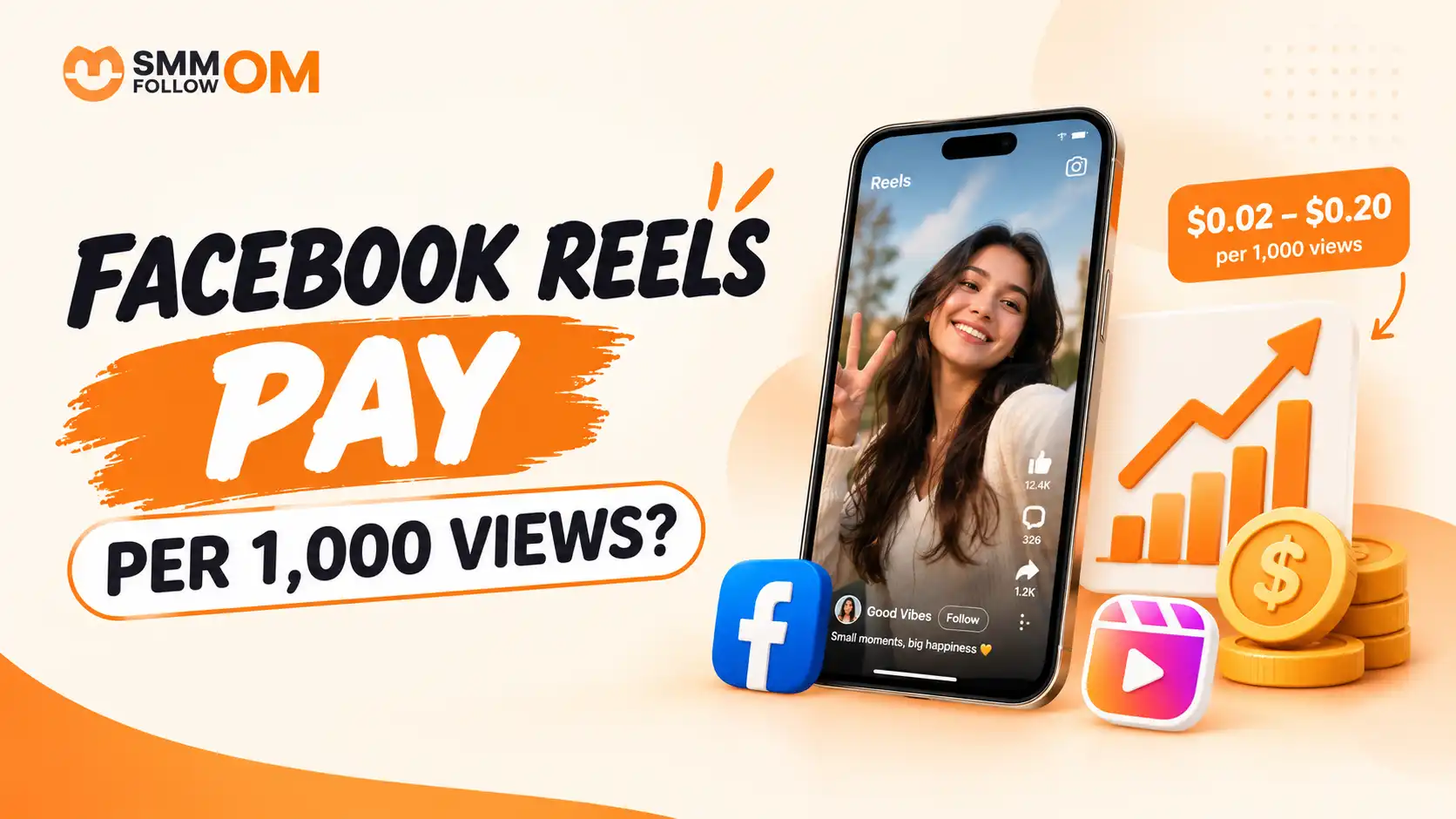
How Much Does Facebook Reels Pay Per 1,000 Views?
You can earn $0.02 to $0.20 per 1,000 views, with many estimates closer to $0.05 to $0.10 per 1,000 Reel views. Numbers above $1 per 1,000 views almost always come from longer videos or a US finance-style audience, not from ordinary Reels. The variation depends on your niche and country. Also, higher numbers may mix Reels earnings with longer-video ad earnings, so they aren't always a good estimate for Reels alone.
Read More
17OCT2026
How to Increase Facebook Followers in 2026: 12 Practical Ways That Actually Help
Increasing Facebook followers is no longer just about posting often. Facebook recommends content based on signals such as what people watch, like, comment on, and show interest in. That means growth depends more on who sees your content, why they visit your Page, and whether they want to follow it.
Read More
15OCT2026
How to Improve Your Facebook Business Page: 13 Practical Steps
Facebook is still the largest social platform in the world, with over 3 billion monthly users at Meta’s last published count. That reach is why the Page itself needs to work, not just the posts you put on it.
Read More